 Pin it
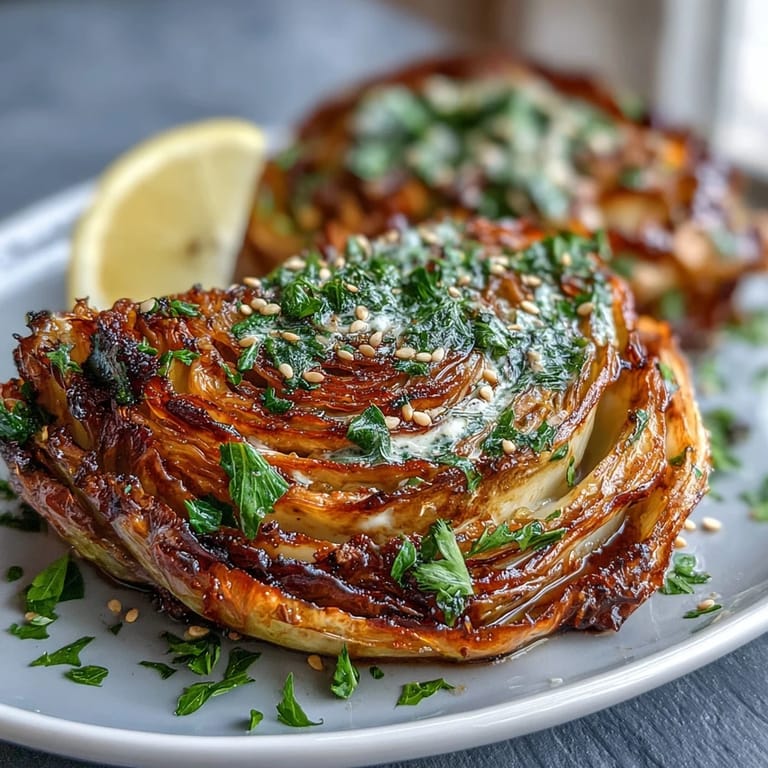
 There's something almost magical about watching cabbage transform in the oven. One evening, while searching for something hearty but light, I sliced a head of cabbage thick and bold, and what emerged from the heat was nothing short of revelation. The edges turned mahogany and crisp, the insides tender and almost sweet. A drizzle of tahini—silky, bright with lemon—turned those humble slices into something that felt both comforting and unexpectedly elegant.
My partner tasted this skeptically at first—cabbage steaks seemed too humble for dinner—but by the second bite, the fork didn't stop moving. Now when friends drop by on weeknights, this is what I make when I want them to feel cared for without spending hours in the kitchen.
Ingredients
- 1 large green cabbage: Look for one that feels dense and heavy for its size; this means more layers and better structure when you slice.
- 3 tbsp olive oil: Use something you'd actually taste, since it becomes the primary fat and flavor carrier.
- 1 tsp ground cumin: This brings a warm, slightly earthy note that makes cabbage taste like you've been cooking all afternoon.
- 1 tsp smoked paprika: The smokiness mimics what happens naturally during roasting and deepens the color beautifully.
- ½ tsp garlic powder: Fresh garlic will burn at this high heat, so the powder here is actually the right choice.
- Salt and freshly ground black pepper, to taste: Season in layers—some on the raw cabbage, and again after roasting when you can taste the final result.
- ⅓ cup tahini: The best tahini tastes nutty and smooth, never bitter; stir it well before measuring since the oil separates.
- 2 tbsp freshly squeezed lemon juice: Fresh juice balances the richness and prevents the sauce from tasting flat or one-dimensional.
- 1 small garlic clove, finely minced: Raw garlic gives the sauce a gentle bite that cooked garlic would miss.
- 2–4 tbsp cold water: Add gradually and taste as you go; every tahini brand has different thickness, so you're the judge here.
- 2 tbsp chopped fresh parsley: The green and brightness matter more than you'd think, cutting through the richness with a subtle freshness.
- 2 tbsp toasted sesame seeds (optional): If you include them, toast your own in a dry pan for about two minutes—they'll smell incredible and taste infinitely better than pre-toasted.
- Lemon wedges: These are not just for show; a squeeze at the table lets everyone adjust the brightness to their taste.
Tired of Takeout? 🥡
Get 10 meals you can make faster than delivery arrives. Seriously.
One email. No spam. Unsubscribe anytime.
Instructions
- Heat your oven and prepare your stage:
- Preheat to 425°F and line a baking sheet with parchment paper so nothing sticks and cleanup stays simple. A hot oven means faster caramelization and more flavorful edges.
- Ready your cabbage:
- Peel away any outer leaves that look tired or damaged, then slice your cabbage into 1-inch rounds straight across the head—you're creating steaks, so each slice should stand on its own. You'll get about 4 to 5 good steaks depending on the cabbage's size.
- Season and oil generously:
- Lay the steaks on your sheet, brush both sides with olive oil, then sprinkle with cumin, smoked paprika, garlic powder, salt, and pepper. The spices won't stick without the oil, so don't skip that step.
- Roast until golden:
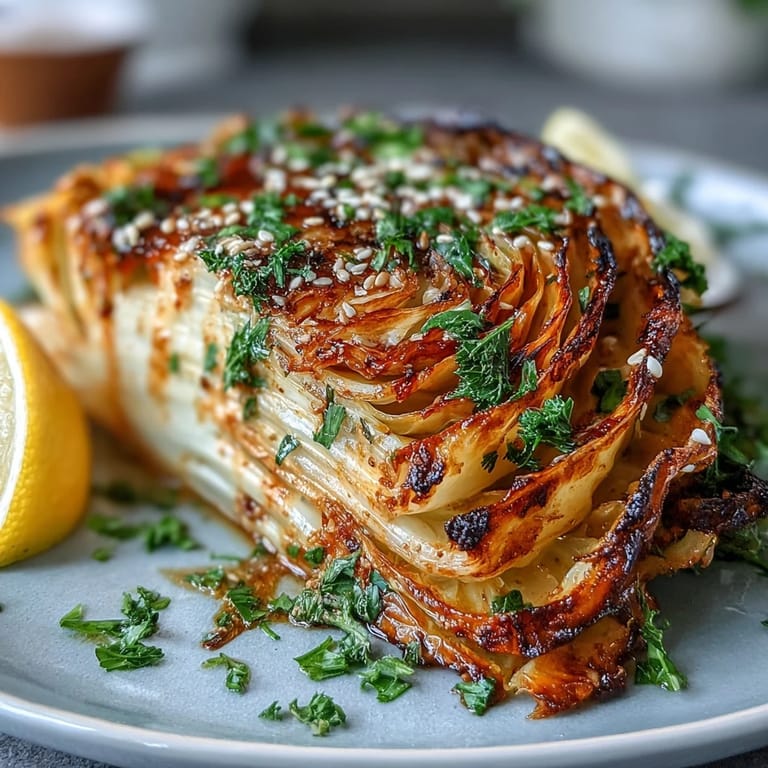
- Slide into the oven for 25 to 30 minutes, flipping halfway through so both sides get a chance to caramelize. You'll know it's done when the edges are deep brown and the centers feel tender when pierced with a fork.
- Make the tahini sauce while cabbage roasts:
- In a bowl, whisk tahini, lemon juice, minced garlic, and a pinch of salt together until combined, then slowly add cold water one tablespoon at a time, whisking constantly. The mixture will go from thick paste to silky drizzle—stop when you can pour it but it still coats a spoon.
- Plate and finish:
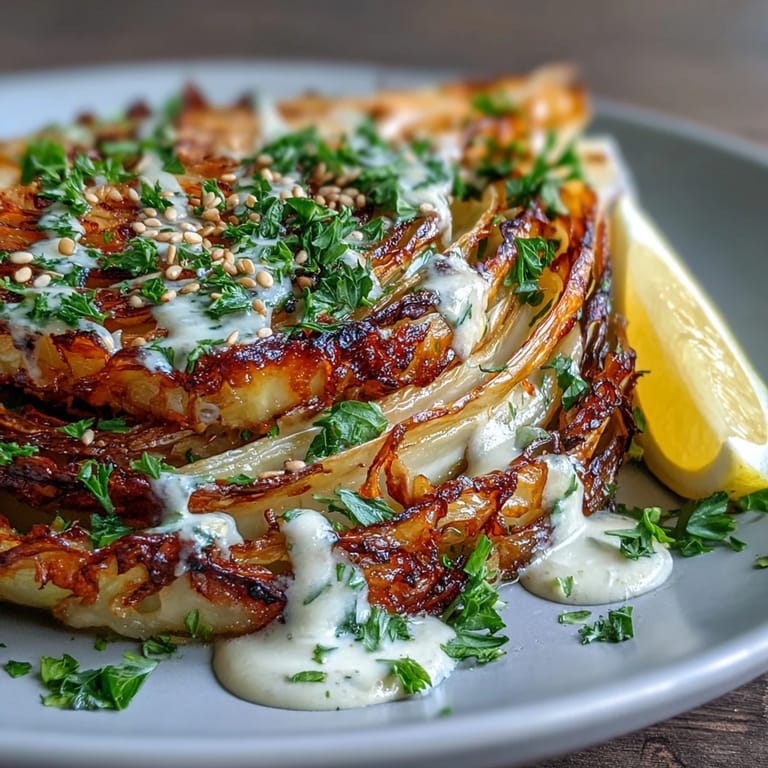
- Transfer your roasted steaks to a platter, drizzle generously with tahini sauce, and scatter with parsley, sesame seeds if using, and a few lemon wedges on the side. Serve warm so the flavors are at their best.
 Pin it
 There was a moment during a family dinner when my nephew, who claims he'll eat nothing green, tried a bite and looked genuinely surprised. Sometimes food is about nutrition or efficiency, but this dish reminded me that cooking is really about small moments of connection and the quiet magic of watching people enjoy something you made.
Why Cabbage Deserves a Second Look
Cabbage gets relegated to slaws and stews, but high heat is what it's been waiting for all along. When you roast it, the natural sugars concentrate and caramelize, the texture becomes almost creamy in the center while the edges crisp up. It's a humble vegetable that transforms into something genuinely luxurious without requiring expensive ingredients or complicated technique.
The Tahini Magic
Tahini might seem like an exotic addition, but it's just ground sesame seeds—a simple pairing that elevates everything it touches. The creamy texture and subtle nuttiness balance the roasted cabbage's slight bitterness and sweetness, while the lemon juice keeps everything tasting bright and alive. This sauce is so good that you'll find yourself making extra just to drizzle on grain bowls and roasted vegetables throughout the week.
Variations and Flexibility
This recipe is a foundation, not a rulebook. I've added everything from za'atar and chili flakes for warmth to swapping parsley for mint or cilantro depending on what's growing in my garden. Some nights I serve it alongside grains like farro or quinoa to make it a complete meal; other times it appears as a side to grilled tofu or chickpea fritters. You can even roast the cabbage a day ahead and reheat gently, making this perfect for meal prep or entertaining without stress.
- Sprinkle za'atar or a pinch of chili flakes on the cabbage before roasting for extra depth and a subtle heat.
- Prepare the tahini sauce up to a day ahead and store it in the fridge, bringing it back to room temperature before drizzling.
- Roasted red cabbage works equally well if you want something earthier, though it takes about 5 minutes longer to caramelize.
 Pin it
 This recipe proved to me that sometimes the simplest dishes, made with intention and a few quality ingredients, are the ones people remember. Make these cabbage steaks the next time you want to eat something satisfying that doesn't feel heavy.
Recipe FAQ
- → How do I cut cabbage into steaks?
Remove any tough outer leaves, then slice the whole cabbage head crosswise into 1-inch thick rounds. You'll typically get 4-5 steaks from one large cabbage. Keep the core intact to help each slice hold its shape during roasting.
- → Can I make the tahini sauce ahead?
Yes, prepare the tahini drizzle up to 3 days in advance and store it in an airtight container in the refrigerator. The sauce may thicken when cold—simply whisk in a little additional water to reach the desired consistency before serving.
- → What temperature works best for roasting cabbage?
Roast at 425°F (220°C) for optimal caramelization. This high heat creates those delicious crispy, browned edges while keeping the centers tender. Lower temperatures may result in steaming rather than roasting.
- → Is this dish suitable for meal prep?
Absolutely. Roasted cabbage steaks reheat beautifully in the oven or toaster oven. Store them separately from the tahini sauce and add the drizzle just before serving to maintain the best texture and freshness.
- → What can I serve with cabbage steaks?
These pair wonderfully with quinoa, rice, or warm flatbread for a complete meal. They also complement grilled fish, roasted chicken, or can stand alone as a hearty main course alongside a simple green salad.
- → Can I use red cabbage instead?
Red cabbage works perfectly and adds beautiful vibrant color. Note that the cooking time may vary slightly—red cabbage can be a bit denser, so check for tenderness after 25 minutes and continue roasting if needed.