 Pin it
 There's something about Sunday mornings that makes you want to slow down, and that's when Eggs Benedict became my silent love language. My neighbor had invited me over for brunch years ago, and I watched her move through the kitchen with this quiet confidence, cracking eggs into simmering water while whisking butter into yolks until it turned into silk. I went home that day and spent an embarrassing amount of time trying to replicate what seemed so effortless, my first hollandaise breaking into a sad, greasy puddle. But somewhere between the fourth attempt and finally getting it right, I realized it wasn't about perfection—it was about that moment when everything comes together warm and beautiful on a plate.
I made this for my parents last spring when they visited, and I remember my dad cutting into that poached egg, watching the yolk break and mingle with the hollandaise, and he just smiled without saying anything. He didn't need to. There was fresh coffee on the counter, someone had opened the kitchen window to let in the April breeze, and for once nobody was checking their phone. That's the thing about Eggs Benedict—it's an excuse to make brunch matter.
Ingredients
- Egg yolks (3 large): The foundation of your hollandaise, and they need to be fresh and room temperature if you want them to emulsify smoothly without breaking on you.
- Fresh lemon juice (1 tablespoon): Freshly squeezed is non-negotiable here—bottled has a bitter edge that you'll taste immediately, and it also helps stabilize the sauce so it doesn't split.
- Unsalted butter (1/2 cup, melted and warm): The temperature matters more than you'd think; if it's too hot it'll cook the yolks, too cool and it won't emulsify properly.
- Dijon mustard (1/2 teaspoon, optional): This tiny amount adds a whisper of complexity and helps prevent the sauce from separating, so I use it every time now.
- Cayenne pepper (pinch): Just enough to remind your palate this isn't boring, without making anyone cough.
- Salt: Season at the end so you can taste as you go—hollandaise forgives nothing, so precision here pays off.
- Large eggs (4): You need fresh ones for poaching; older eggs will spread and fall apart in the water, trust me on this.
- English muffins (2, split): The nooks and crannies catch the hollandaise, and toasting them to golden brown gives you texture that matters.
- Canadian bacon (4 slices): A quick pan-sear wakes up its flavor and brings everything together; cold slices taste forgotten.
- White vinegar (1 tablespoon): Helps set the egg whites faster, so your poached eggs stay together and don't cloud the water.
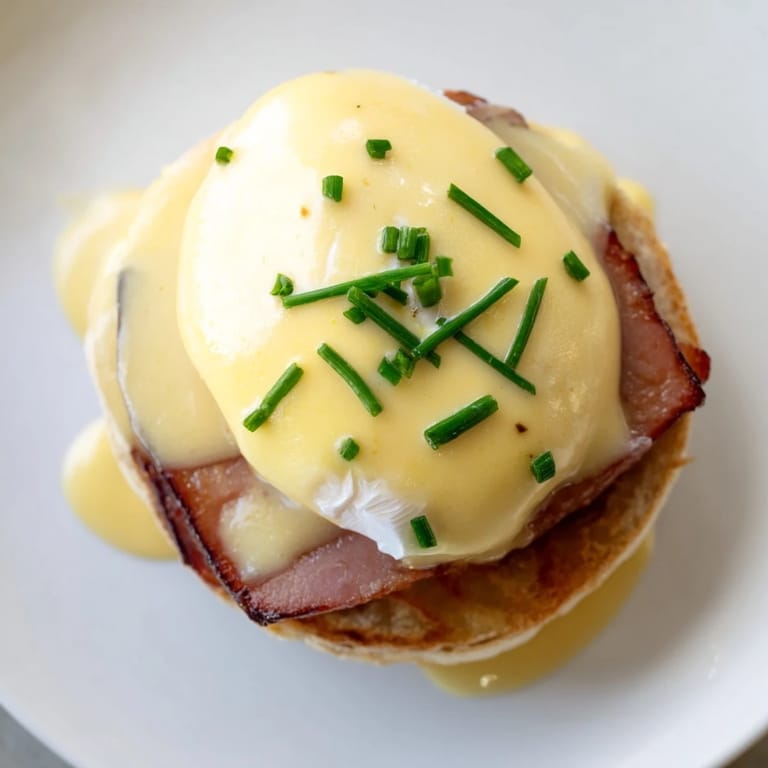
- Chives or parsley (for garnish): The green looks beautiful and adds a tiny sharp note that cuts through the richness perfectly.
Tired of Takeout? 🥡
Get 10 meals you can make faster than delivery arrives. Seriously.
One email. No spam. Unsubscribe anytime.
Instructions
- Set up your double boiler and start the hollandaise:
- Fill a pot with an inch of water and bring it to a gentle simmer—you want the bowl to sit just above the water without touching it. Whisk your egg yolks and lemon juice together in that heatproof bowl, watching as they get pale and thick, almost ribbony, which means the yolks are starting to cook gently. This takes about 2-3 minutes of whisking, and you're building the structure that'll hold your sauce together.
- Add the butter slowly and don't rush:
- Once the yolks look doubled in volume, start drizzling in the warm melted butter one slow pour at a time, whisking constantly so the emulsion doesn't break. This is where patience actually matters—if you dump it in, the sauce will split into greasy sadness, but if you take your time it becomes this creamy, silky thing. Whisk in the mustard, cayenne, and salt, then move the bowl off the heat but keep it warm.
- Toast the English muffins until they're golden and slightly crispy:
- Split them if they aren't already, butter them lightly, and get them golden brown in a toaster or under the broiler. You want them sturdy enough to hold the weight of the egg and sauce without getting soggy immediately.
- Warm the Canadian bacon in a skillet over medium heat:
- Lay the slices flat and let them sit for a minute per side until they're lightly browned and warm all the way through—about 1-2 minutes. Don't mess with them too much; you're just waking them up, not cooking them to a crisp.
- Poach the eggs with intention:
- Fill a medium saucepan with 2-3 inches of water, add a tablespoon of white vinegar, and bring it to a gentle simmer—you want barely visible bubbles, not a rolling boil or your eggs will scatter. Crack each egg into a small bowl first, then swirl the water with a spoon to create a gentle whirlpool and slide the egg into the center, where it'll naturally curl into shape. Let each egg sit for 3-4 minutes until the whites are set and opaque but the yolk still jiggles when you touch the egg gently with a spoon.
- Assemble everything while everything is still warm:
- Place a toasted English muffin half on each plate, top it with a piece of Canadian bacon, then nestle a poached egg on top. Spoon warm hollandaise generously over everything, letting it cascade down the sides, and finish with a pinch of fresh chives or parsley.
 Pin it
 The first time I got all four components to finish at the same moment—the hollandaise still silky, the eggs perfectly poached, the muffins warm, the bacon just kissed with brown—I actually felt proud of myself in a way that has nothing to do with ego. It's the kind of breakfast that makes you understand why people linger over brunch, why this dish has been beloved for over a century. There's something deeply satisfying about building it yourself.
Variations That Work
Eggs Benedict is a blank canvas if you think of it right. I've made it with smoked salmon instead of Canadian bacon on mornings when I wanted something more delicate, and the hollandaise plays beautifully with that saltiness. For vegetarian friends I sauté fresh spinach with a touch of garlic and layer that under the egg—it's called Eggs Florentine, and honestly sometimes I think I prefer it because the spinach has more flavor to contribute than bacon alone.
The Hollandaise Secret Nobody Talks About
After the third or fourth time my hollandaise broke, I stopped trying to eyeball the butter temperature and started using an instant-read thermometer—butter should be around 180 degrees Fahrenheit when you start adding it. Beyond that, I learned that room temperature ingredients are your friend; cold eggs and cold butter are working against you from the start. One more thing that changed everything for me was cracking my eggs the night before into small bowls and letting them sit in the fridge—when you poach them they're already at a consistent temperature.
- A pinch of white pepper instead of black looks more elegant and tastes cleaner on the palate.
- If your hollandaise breaks, start with a fresh yolk in a clean bowl and whisk in the broken sauce slowly—it usually comes back.
- Make the hollandaise sauce up to 2 hours ahead and keep it in a warm (not hot) spot; it'll hold better than you think.
 Pin it
 Eggs Benedict isn't a weeknight dinner situation, and I think that's exactly why it matters. It's an invitation to slow down and build something delicious with your hands, to care about the details, to make brunch feel like an event. Once you've mastered the hollandaise, this dish becomes your quiet confidence in the kitchen.
Recipe FAQ
- → How do you poach eggs for Eggs Benedict?
Use simmering water with a splash of vinegar to help the whites coagulate. Crack eggs into a small bowl, create a gentle water vortex, then slide eggs in. Poach 3-4 minutes until whites are set but yolks remain runny.
- → What is the best way to make hollandaise sauce?
Whisk egg yolks and lemon juice over simmering water until thickened, then gradually add warm melted butter while constantly whisking. Season with mustard, cayenne, and salt for smooth, creamy texture.
- → Can Canadian bacon be substituted?
Yes, smoked salmon or sautéed spinach offer great alternatives for pescatarian or vegetarian preferences without compromising flavor.
- → How do you keep hollandaise sauce from curdling?
Keep the sauce warm but not hot, avoid overheating by using gentle heat and constant whisking to maintain a smooth consistency.
- → What garnishes complement this dish?
Chopped chives or parsley add a fresh herbal note and a pop of color to finish the presentation beautifully.