 Pin it
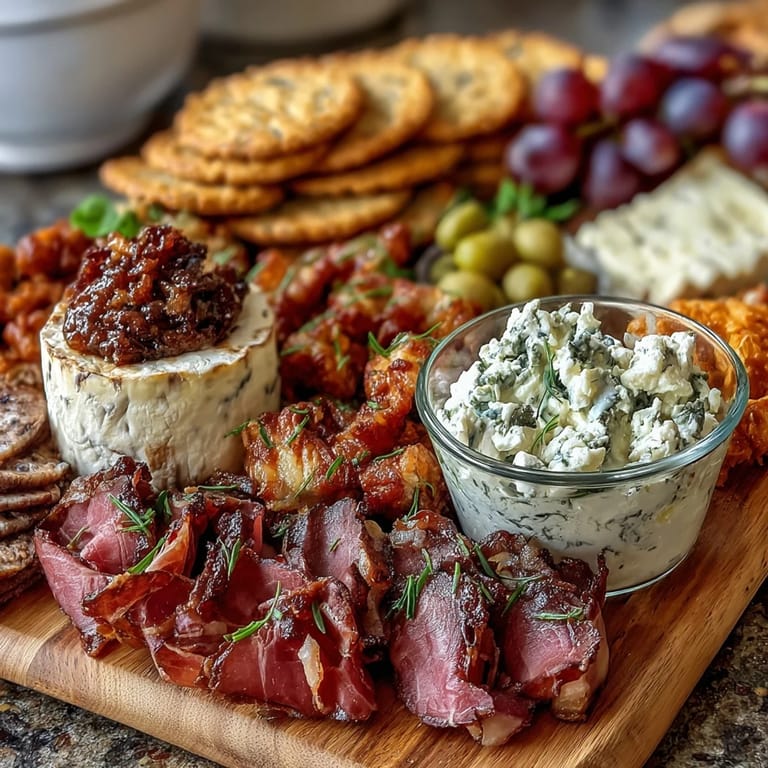
 My neighbor texted me photos of her new kitchen the morning after they moved in, and I knew exactly what had to happen—a charcuterie board so beautiful and generous it would make that bare countertop feel like home. There's something magical about arranging cured meats, cheeses, and vibrant produce on a board; it's less about following rules and more about creating a landscape of flavors that invites people to linger and talk. I'd made boards before for dinner parties, but this one felt different, purposeful, like I was saying welcome in the most delicious way possible. The whole thing came together in under thirty minutes, yet looked like I'd spent hours planning it. That's the real secret to charcuterie—it's less about complexity and more about thoughtful abundance.
When Sarah opened her front door to see that board, her face just lit up in a way that had nothing to do with the prosciutto or the brie. She grabbed a plate, started building these little combinations—blue cheese with fig, salami with roasted pepper dip—and then her husband wandered over, then her parents, and suddenly the kitchen became the warmest room in that empty house. I watched people create their own flavor stories instead of just eating what was put in front of them, and that felt like the whole point.
Ingredients
- Prosciutto (120 g): The delicate, salty foundation—fold it loosely so it catches the light and feels elegant rather than crumpled on the board.
- Salami (120 g): Choose a good quality variety; this is where guests often return multiple times, so make it worth their while.
- Smoked ham (120 g): The approachable classic that even picky eaters tend to enjoy, so don't skip it.
- Chorizo slices (100 g): Adds that vibrant red color and a little spice that makes people pause and take notice.
- Brie (150 g): Slice it just before serving so it stays creamy and doesn't dry out, and watch it disappear first.
- Aged cheddar (150 g): Cut into cubes so people can grab individual pieces without feeling like they're wrestling with a block of cheese.
- Gouda (120 g): Slice it thin enough to pair easily with crackers, thick enough to taste like something real.
- Blue cheese (100 g): Crumble this by hand rather than pre-crumbled; the texture matters and it stays fresher longer.
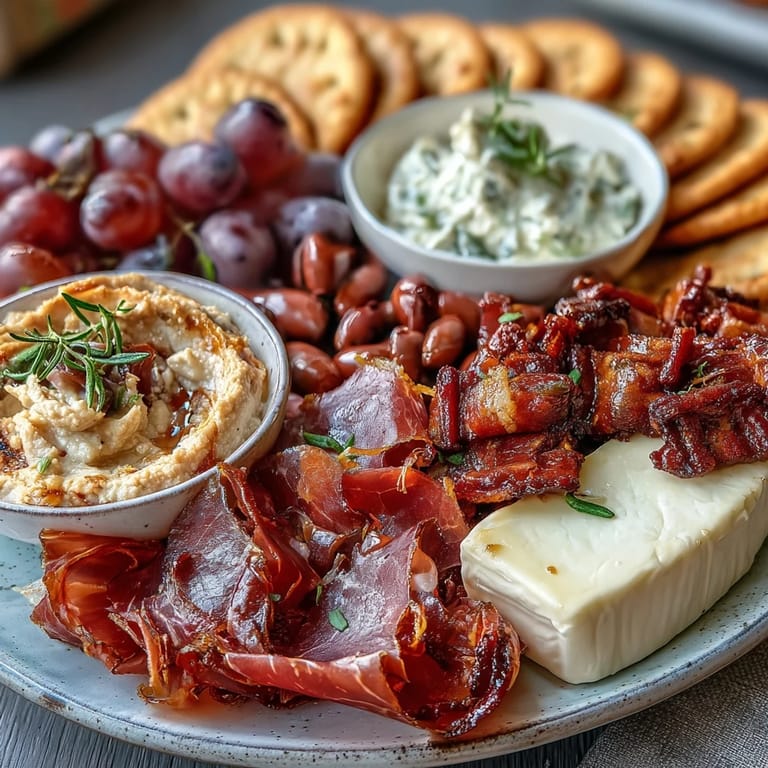
- Hummus (100 g): A light, protein-rich dip that balances all the richness of the meats and cheeses.
- Tzatziki (100 g): Cool and herbaceous, it makes vegetables feel exciting instead of obligatory.
- Roasted red pepper dip (100 g): The sweet, smoky element that tied Sarah's flavor combinations together in that first moment.
- Assorted crackers (150 g): Mix textures and flavors—some sturdy ones for the dips, some delicate ones for the cheese.
- Baguette slices (100 g): Toast them lightly if you have time; they stay crispier longer and feel less like an afterthought.
- Breadsticks (100 g): These stand upright and add height to your board, making it look more abundant than it actually is.
- Red grapes (1 cup): Their sweetness bridges the gap between savory and the fruit elements, and they're forgiving if they sit out.
- Green grapes (1 cup): A color contrast that makes the board feel intentional rather than random.
- Cherry tomatoes (1 cup): Halve them if they're large so people can actually eat them without making a mess at a cocktail hour.
- Cucumber slices (1 cup): Keep them cold in water until the last moment; they wilt faster than you'd think.
- Red bell pepper (1): Slice it into strips so people can dip it directly into hummus or tzatziki.
- Baby carrots (1 cup): Leave them whole for visual appeal and because there's something satisfying about snapping one off the board.
- Mixed nuts (½ cup): Toast them lightly if they're raw; it wakes up their flavor and makes them feel intentional.
- Olives (½ cup): Pit them ahead of time—nothing ruins a party moment like someone discovering a pit they weren't expecting.
- Dried apricots (¼ cup): Their tartness adds complexity and pairs beautifully with both the blue cheese and the cheddar.
- Dried figs (¼ cup): These feel luxurious and show you put thought into the board, not just grabbed what was easy.
- Fresh herbs (rosemary, thyme): Tuck these around the edges and in gaps; they add color, fragrance, and a signal that this is a thoughtfully composed board.
Tired of Takeout? 🥡
Get 10 meals you can make faster than delivery arrives. Seriously.
One email. No spam. Unsubscribe anytime.
Instructions
- Start with the meats:
- Arrange the prosciutto, salami, smoked ham, and chorizo in loose, natural folds across your board—think landscape, not pattern. Let them drape and overlap so they catch light and look generous rather than calculated.
- Position your cheeses:
- Place the brie, cheddar, gouda, and blue cheese in clusters around the board, spacing them far enough apart that guests can reach each one without navigating through others. Think of them as anchors that organize the rest.
- Nestle the dips:
- Spoon hummus, tzatziki, and roasted red pepper dip into small bowls, then tuck them among the meats and cheeses where they look like natural destinations rather than afterthoughts. Leave enough space around them so people can actually dip without elbowing their neighbor.
- Fan out your crackers and breads:
- Arrange crackers in loose groupings so they look abundant but not suffocating, and prop baguette slices and breadsticks at angles so they stand out visually. This is where you create pockets of negative space that make everything feel less crowded.
- Fill the gaps with produce:
- Scatter grapes, cherry tomatoes, cucumber slices, bell pepper strips, and baby carrots into the empty spaces, clustering them by color so the board feels organized rather than chaotic. Think of them as the jewels that catch the eye.
- Add nuts and dried fruit:
- Toss mixed nuts, olives, dried apricots, and figs into small piles throughout the board, leaving just enough space between clusters that people feel invited to grab handfuls. These little treasures are often what people circle back for.
- Finish with fresh herbs:
- Tuck sprigs of rosemary and thyme into gaps and around the edges, tucking them under the prosciutto folds or laying them across the cheeses. They add color, fragrance, and signal that you cared about the details.
- Serve with confidence:
- Set your board out and watch people build their own flavor stories; replenish items as they empty, but resist the urge to keep it perfect. The most beautiful charcuterie board is one that looks loved.
 Pin it
 That evening, I stayed long enough to see Sarah's new kitchen filled with laughter and voices, neighbors stopping by to see the new place, all of them circling that board like it held something more than food. It's funny how a carefully arranged selection of meats and cheeses can do that—make a house feel like home before anyone's had time to unpack the boxes.
The Art of Arrangement
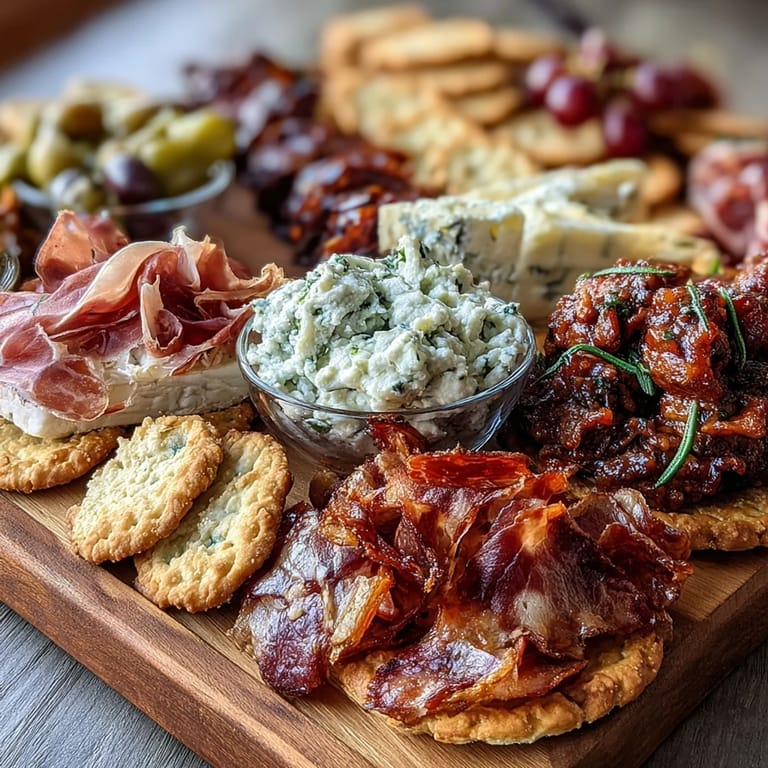
The thing nobody tells you about charcuterie boards is that arrangement matters as much as ingredients. I spent years following some invisible rule that a board had to be symmetrical or organized in neat sections, but the most beautiful boards I've made come from thinking about balance rather than pattern. Distribute colors across the board so warm reds and oranges aren't all bunched in one corner, place soft cheeses near crackers but not directly on top of them, and always leave some breathing room so the board feels inviting rather than claustrophobic.
Timing and Temperature
Pull your cheeses out of the refrigerator about thirty minutes before serving so they can come to room temperature and actually taste like something—cold cheese is bland cheese, and you've chosen good ingredients, so let them shine. The cured meats and nuts are perfectly fine at room temperature, and in fact improve when they're warm enough to release their flavors. Vegetables are the exception; keep them cold until the last moment, and if you're making this more than a few hours ahead, leave the herbs off until right before guests arrive so they stay vibrant and fresh.
Customization and Flexibility
The beauty of a charcuterie board is that it bends to your guests and your preferences without losing its essence. Skip the chorizo if you prefer milder flavors, double down on the blue cheese if that's where your heart is, or load up on vegetables if you're feeding more vegetarians than meat eaters. One last thought—always check labels on hummus and other prepared items for allergens, and keep ingredients separate enough that people with dietary restrictions can navigate the board comfortably.
- Add honey or fig jam in a small bowl if you want to push the sweet and savory contrast even further.
- Pair this with crisp white wine or a light red like pinot noir, and watch how it changes the way people taste the cheeses.
- Prep everything except final arrangement the day before, and you've bought yourself a stress-free evening.
 Pin it
 Every time I make a charcuterie board, I remember Sarah's kitchen that evening and how a simple act of generosity with good ingredients can transform a empty house into a home. That's what this is really about.
Recipe FAQ
- → How should I arrange the ingredients for the best presentation?
Place the cured meats in loose folds or rolls to create texture. Space cheeses evenly around the board, add dips in small bowls nestled among items, and fan out crackers and breads in sections. Fill gaps with fresh fruits and vegetables, then scatter nuts and olives for added interest. Finish with fresh herbs.
- → Can I customize the selection for dietary restrictions?
Yes, you can substitute meats or cheeses to meet dietary preferences. Consider gluten-free crackers for guests with sensitivities and include vegetarian-friendly options among the dips and accompaniments.
- → What are some good pairings to serve with this board?
A crisp white wine or a light red wine pairs wonderfully, enhancing the flavors of cured meats and cheeses while balancing the variety of dips and fresh produce.
- → How long will the board stay fresh once assembled?
It's best to serve immediately after assembly to maintain freshness. If needed, replenish items during the gathering and keep the board covered when not in use to preserve texture and flavor.
- → Are there any allergen considerations to keep in mind?
This selection contains milk (from cheeses and dips), nuts, gluten (in crackers and breads), and may include sesame in dips like hummus. Always check ingredient labels and inform guests accordingly.