 Pin it
 There's something about the smell of garlic and olive oil hitting a hot pan that makes you feel like you're cooking in someone's Tuscan kitchen, even if you're just in your apartment on a Tuesday night. My neighbor Maria once stood in my doorway—uninvited, as she often did—and declared that real Italian soup doesn't need fancy ingredients, just patience and the right herbs. She was right, of course. This soup became my answer to those evenings when I wanted something that tasted like it had been simmering for hours but actually came together in under an hour.
I made this soup for my sister when she was moving into her first apartment, and she actually cried—not because it was that emotional, but because she'd been living on takeout for weeks. She ate two bowls and asked for the recipe immediately, which felt like the highest compliment. Now whenever she mentions she's had a rough day, I know she's probably making this in her own kitchen, and that makes me oddly happy.
Ingredients
- Olive oil (2 tablespoons): Don't skimp here—good olive oil carries the flavor of the whole dish, and cheap oil tastes thin by comparison.
- Onion and garlic: These are your flavor foundation; take the extra minute to mince them properly so they distribute evenly and cook gently.
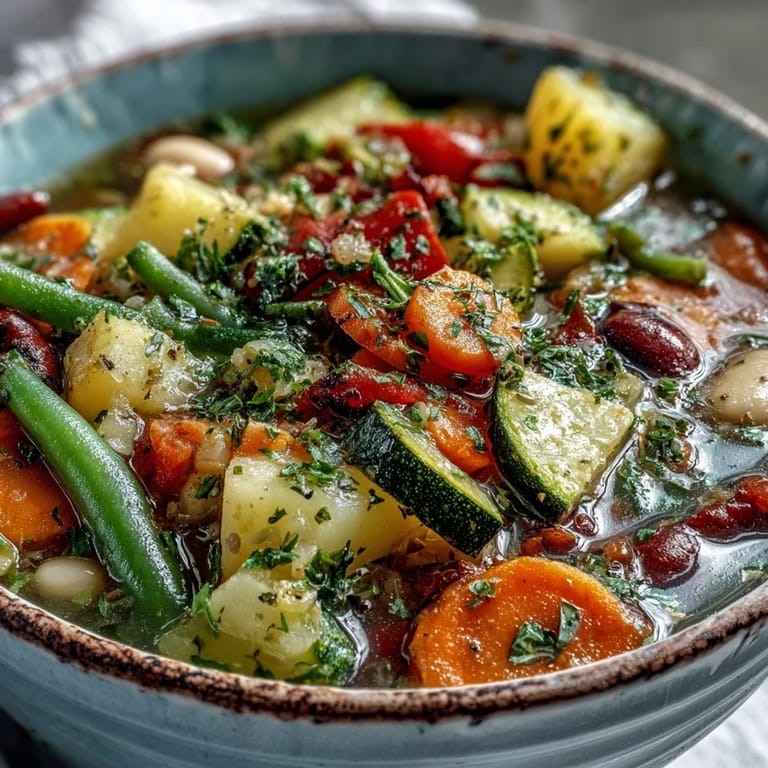
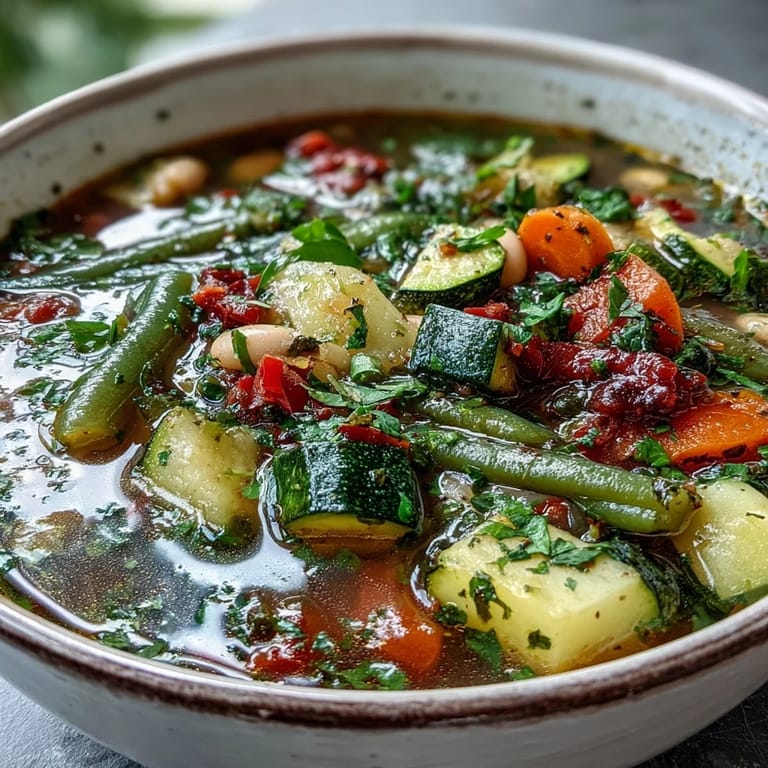
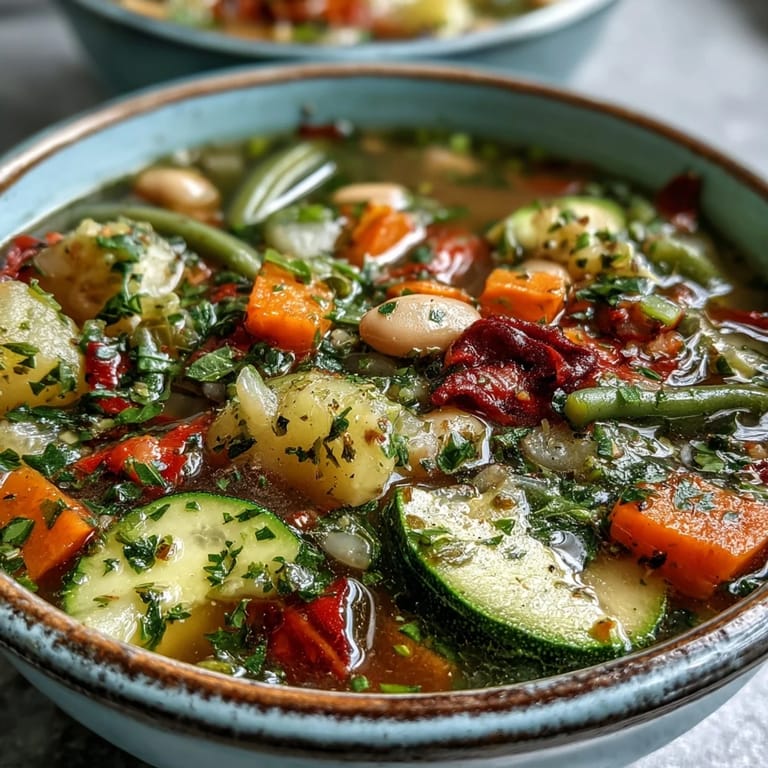
- Carrots, celery, zucchini, red bell pepper, and green beans: The vegetable variety keeps each spoonful interesting, and the different textures make the soup feel substantial.
- Diced tomatoes with juices: Canned tomatoes are actually more reliable than fresh ones here because they're picked at peak ripeness and already broken down slightly.
- Vegetable broth (4 cups): This is the soul of the soup; use something you'd actually drink on its own, not the sad salty stuff that tastes like boiled water.
- Potato (1 medium): It adds body and slight earthiness without making the soup heavy, and it softens into the broth naturally.
- Baby spinach leaves (2 cups): Add these at the very end so they stay bright and tender rather than melting into the background.
- Dried oregano, basil, thyme, and rosemary: Dried herbs are actually better here than fresh because they've concentrated; they infuse slowly and flavor the whole pot evenly.
- Bay leaf: This quiet ingredient ties everything together, though you must remember to fish it out before serving or you'll have an awkward moment.
- Salt and freshly ground black pepper: Taste as you go—the canned tomatoes and broth already have salt, so you're seasoning on top of seasoning.
- Cannellini beans (optional): These add protein and a creamy texture that makes the soup feel more like a meal than a side.
- Fresh parsley and Parmesan (optional): These finish the soup with brightness and richness, though the soup stands perfectly on its own without them.
Tired of Takeout? 🥡
Get 10 meals you can make faster than delivery arrives. Seriously.
One email. No spam. Unsubscribe anytime.
Instructions
- Build your aromatics:
- Heat olive oil in a large pot over medium heat and add diced onion and minced garlic; you're looking for that exact moment when the garlic smells amazing but hasn't started to turn golden, usually 2–3 minutes. This is where the flavor foundation gets laid, so don't rush it or let it burn.
- Soften the harder vegetables:
- Stir in carrots, celery, zucchini, red bell pepper, and green beans, cooking for 5–6 minutes while stirring occasionally. You want them to start releasing their sweetness and softening at the edges without turning mushy.
- Add the liquids and seasonings:
- Pour in the canned tomatoes with their juices, vegetable broth, and diced potato; then sprinkle in oregano, basil, thyme, rosemary, bay leaf, salt, and pepper. Stir everything together so the seasonings distribute evenly throughout the pot.
- Bring to a simmer:
- Turn up the heat until you see a rolling boil, then reduce the heat and let it simmer uncovered for 20–25 minutes until the vegetables are tender all the way through. You'll know it's ready when a fork slides through the carrot and potato pieces easily.
- Add beans if using:
- If you're including cannellini beans, add them now and simmer for another 5 minutes to warm through and let them absorb some of the broth's flavor.
- Finish with spinach:
- Remove the bay leaf (seriously, don't skip this), then stir in the baby spinach leaves and cook for just 1–2 minutes until they wilt into the soup. This keeps them bright green and tender rather than darkened and tired.
- Taste and adjust:
- Take a spoonful, let it cool slightly, and taste it honestly—add more salt, pepper, or herbs if needed. Remember that the soup will taste a bit more intense after it cools slightly.
 Pin it
 One winter evening, my mom showed up at my door with the flu and no appetite, and I made her this soup because it was all I knew to do. She ate half a bowl and said it was exactly what she needed—warm, honest, not trying too hard. That's when I realized this recipe had stopped being about cooking and started being about caring, which might be the point of cooking all along.
Why This Soup Feels Different
Most vegetable soups taste the same because they follow the same formula: soften vegetables, add broth, serve. This one tastes different because the Italian herbs do the actual work of flavoring, not just the vegetables and broth trying to carry everything. The combination of oregano, basil, thyme, and rosemary creates a flavor profile that's herbaceous and alive, almost like eating the Mediterranean in a bowl.
How to Make It Your Own
The beauty of this soup is that it's flexible without being boring. You can swap vegetables based on what's in your kitchen or what's in season—fennel instead of celery, eggplant instead of zucchini—and the herb blend still ties everything together. Some people add a squeeze of lemon at the end, others add a splash of red wine before the broth, and some stir in a spoonful of pesto for brightness.
Storage and Make-Ahead Tips
This soup actually improves after a day or two in the refrigerator because the vegetables continue softening and the herbs infuse deeper into the broth. It freezes beautifully for up to three months; just let it cool completely before transferring to containers, and remember to leave a little space at the top because it expands slightly when frozen.
- For extra heartiness without heaviness, add small pasta like ditalini or orzo during the last 10 minutes of cooking so it absorbs broth without breaking apart.
- If you're making this gluten-free, double-check that your broth and any optional pasta are certified gluten-free, since hidden gluten sneaks into packaged ingredients all the time.
- Leftovers taste better on day two or three, so don't hesitate to make a double batch and settle into days of effortless lunches.
 Pin it
 This soup has become my default answer to almost every question: something to bring someone who's sick, something to make when I'm overwhelmed, something to share when words aren't enough. It's simple enough that it never feels like a burden, and honest enough that it always feels like care.
Recipe FAQ
- → Can I use fresh herbs instead of dried?
Yes, you can substitute fresh herbs. Use three times the amount of fresh herbs compared to dried. Add fresh oregano, basil, and thyme during the last 10 minutes of cooking to preserve their bright flavor.
- → How long can I store this soup?
Store in an airtight container in the refrigerator for up to 5 days. The soup also freezes beautifully for up to 3 months. Cool completely before freezing and reheat gently on the stovetop.
- → Can I add other vegetables?
Absolutely! This soup is very versatile. Try adding cabbage, kale, butternut squash, or mushrooms. Just adjust cooking times based on the vegetables you choose to ensure everything is tender.
- → What can I serve with this soup?
Serve with crusty Italian bread, garlic bread, or focaccia for dipping. A simple green salad with balsamic vinaigrette makes an excellent side dish for a complete meal.
- → How can I make this soup more filling?
Add small pasta like ditalini, orzo, or small shells during the last 10 minutes of cooking. You can also include white beans, chickpeas, or lentils for added protein and substance.
- → Can I make this in a slow cooker?
Yes, sauté the onion and garlic first, then transfer everything except spinach to a slow cooker. Cook on low for 6-7 hours or high for 3-4 hours. Add spinach during the last 15 minutes.