 Pin it
 There's something about the smell of sesame oil hitting a hot wok that immediately transports me back to a tiny noodle shop in Bangkok where I watched a cook move with practiced ease, barely looking at what his hands were doing. Years later, I recreated that energy in my own kitchen, and this bowl became my answer to those nights when I craved something bright, balanced, and ready in under an hour. The sauce is what got me obsessed—that perfect marriage of salty, sweet, tangy, and rich that makes you want to scrape the bottom of the bowl.
I made this for my roommate on a Thursday when she came home exhausted from a double shift, and watching her face light up as she took that first bite was the moment I knew this recipe belonged in regular rotation. She asked for the sauce recipe before she'd even finished eating, which is always a good sign.
Ingredients
- Boneless, skinless chicken breast or thighs (500 g): Thighs stay more forgiving and juicier if you're not vigilant about cooking time, but breasts work fine if you slice them thin and don't overcook.
- Tamari or low-sodium soy sauce (3 tbsp): Tamari is naturally gluten-free and tastes slightly less harsh than regular soy, but use whatever you have on hand.
- Fish sauce (1 tbsp): This is the secret weapon that makes everything taste deeper and more complex—don't skip it or substitute, but use good quality if possible.
- Rice vinegar (2 tbsp): The acidity cuts through richness and keeps the sauce from tasting one-dimensional.
- Honey (1½ tbsp): Balances the salt and acid naturally without making anything taste like dessert.
- Toasted sesame oil (2 tbsp): Use the toasted kind for maximum flavor impact, and never cook with it at high heat or it turns bitter.
- Neutral oil like canola or sunflower (2 tbsp): This helps the sauce emulsify and stretches the sesame oil so it coats everything evenly.
- Garlic (3 cloves, minced): Fresh garlic brings brightness that jarred never quite captures, so don't take the shortcut.
- Fresh ginger (1 tsp, grated): Optional but honestly worthwhile—it adds a subtle warmth that ties everything together.
- Chili flakes or Sriracha (1 tsp, optional): Add this to the marinade if you like heat, or leave it out and let people customize at the table.
- Dried rice noodles (250 g): Rice noodles cook quickly and have a delicate texture, but any noodle you like works here.
- Carrot (1 medium, julienned): Raw carrots add crunch and subtle sweetness without needing any cooking.
- Cucumber (1 small, thinly sliced): Keep it cold and crisp right up until serving—this is what makes the bowl feel refreshing.
- Bell pepper (1, thinly sliced): Any color works, but red or orange ones taste sweeter and look more vibrant.
- Spring onions (4, sliced): The white and light green parts go in the vegetables, save the dark green tops as a garnish for color and a mild onion bite.
- Bean sprouts (100 g): These stay crisp and add a delicate texture that gets lost if you cook them, so always serve raw.
- Fresh cilantro (2 tbsp, chopped): This is a love-it-or-hate-it herb, but it adds something fresh and specific—omit if it tastes like soap to you.
- Toasted sesame seeds (2 tbsp): Toast them yourself if you can because store-bought sometimes tastes stale, but don't burn them or they turn bitter.
- Lime wedges: A squeeze of lime just before eating brightens everything and feels like the final touch that makes it restaurant-quality.
Tired of Takeout? 🥡
Get 10 meals you can make faster than delivery arrives. Seriously.
One email. No spam. Unsubscribe anytime.
Instructions
- Make your sauce, split it in half, and marinate the chicken:
- Whisk tamari, fish sauce, rice vinegar, honey, sesame oil, neutral oil, minced garlic, and ginger together in a bowl until the honey dissolves and everything looks glossy. Set aside half for drizzling later, then toss the chicken with the other half and let it sit for 15 minutes while you prep vegetables—the chicken will taste better and cook more evenly.
- Cook your noodles while the chicken marinates:
- Bring a pot of water to a boil, add noodles, and stir immediately so they don't stick together. Follow the package time but taste a minute early because overcooked noodles turn mushy and lose their texture. Drain into a colander, rinse with cold water until cool to the touch, and set aside.
- Sear the chicken until it's cooked through and caramelized:
- Get your skillet or wok screaming hot, then add the marinated chicken in a single layer without moving it for the first couple minutes—this is how you get those golden, flavorful edges. Stir occasionally for another 3-5 minutes until the thickest piece is no longer pink inside, then transfer to a plate.
- Build your bowls with intention:
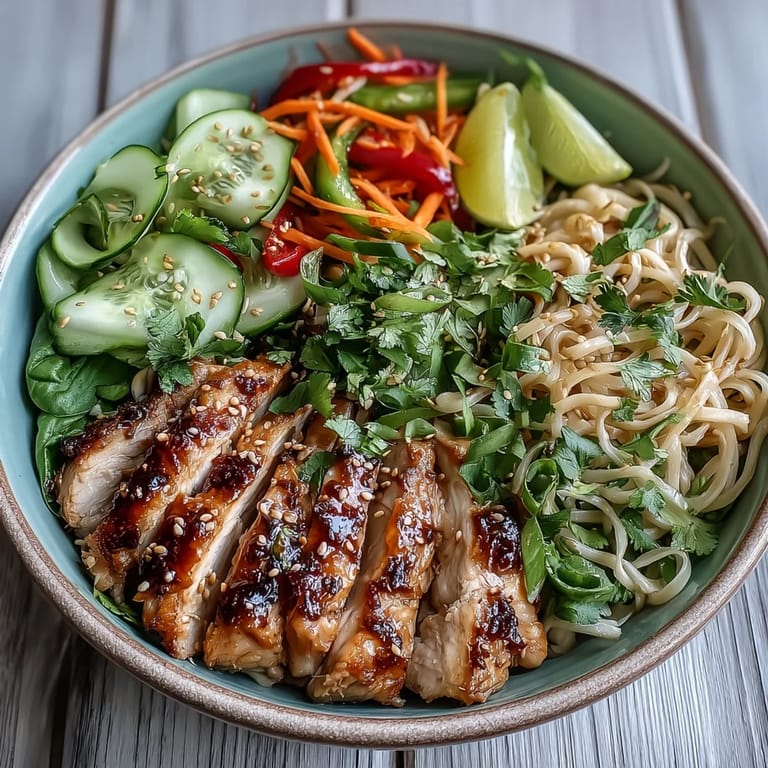
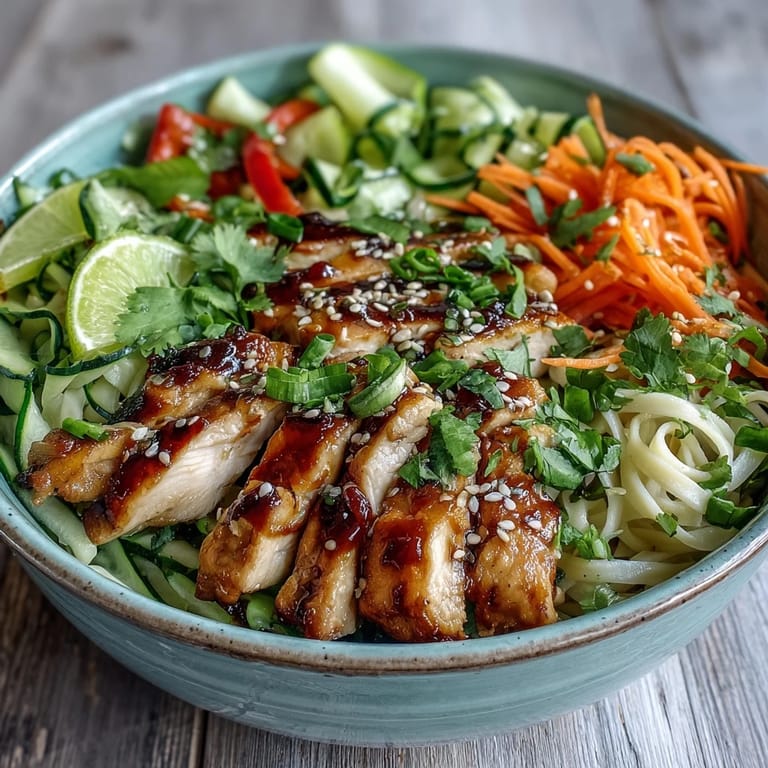
- Divide noodles among bowls, then arrange chicken and raw vegetables on top in whatever pattern feels right—this step takes two minutes but makes everything look intentional. The contrast of colors and textures is part of what makes this dish feel special.
- Dress the bowls and finish with flavor:
- Drizzle the reserved sauce over each bowl, then scatter cilantro and sesame seeds on top and squeeze lime juice over everything. Taste one bite before serving and add more chili flakes if you want heat, or more lime if it needs brightness.
 Pin it
 My mom tried this bowl once when she was visiting and said it reminded her of places we'd eaten together years ago, which made me realize that food like this bridges the gap between memory and right now. It's comfort with excitement built in.
The Sauce Is Everything
I learned early on that this recipe lives or dies by the sauce, so don't rush it or try to eyeball the proportions. The balance of salty, sweet, tangy, and rich is what makes someone ask for seconds and want the recipe. If your sauce tastes too sharp, add a half teaspoon of honey; if it tastes flat, add a squeeze of lime or another splash of fish sauce. This is where your palate becomes your guide.
How to Make It Your Own
I've made this bowl with shrimp on nights when I wanted something lighter, with tofu when vegetarian friends came over, and with leftover rotisserie chicken when I was short on time. The noodle base is flexible enough that you can build whatever version makes sense for your kitchen. Snap peas, shredded cabbage, edamame, or even shredded carrots instead of julienned ones all work beautifully.
Timing and Temperature Matter
The magic of this bowl is that every element should taste distinct—warm chicken, cool noodles, crisp vegetables, and sauce that coats everything without drowning it. Don't let components sit around getting soggy or warm; assemble right before eating so textures stay bright. This is a bowl that tastes best when you move at a reasonable pace and don't overthink the execution.
- Cook the chicken just until done, not a second longer, or it gets stringy and dry.
- Keep your vegetables cold and raw right up until the moment you bowl them.
- Taste as you go and adjust the sauce seasoning before you serve, not after.
 Pin it
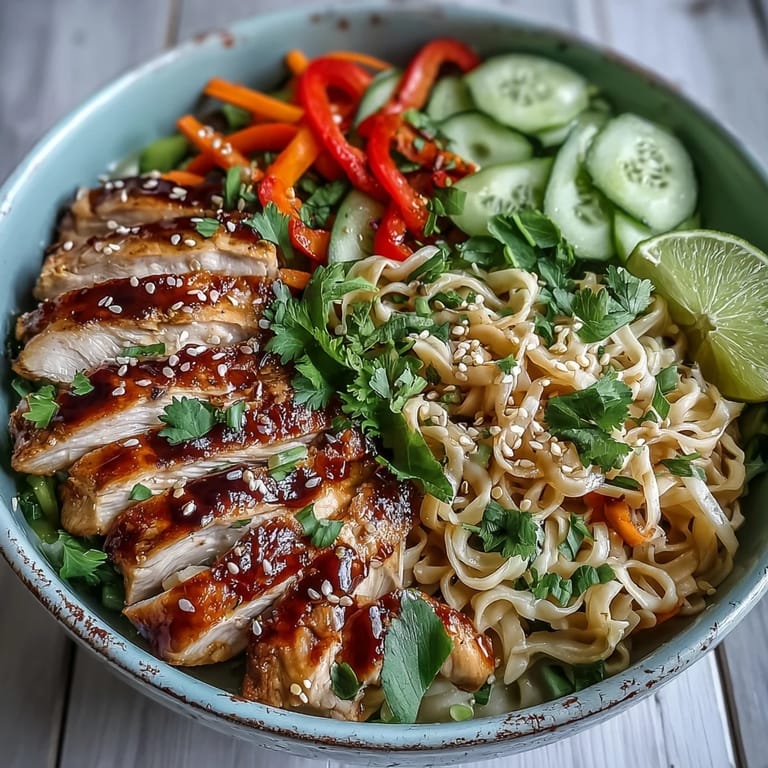
 This bowl became my answer to takeout because it tastes like you put in way more effort than you actually did. Make it once and it becomes part of your regular rotation.
Recipe FAQ
- → Can I use other proteins instead of chicken?
Yes, thinly sliced beef, pork, or shrimp work wonderfully with these flavors. For a vegetarian version, use firm tofu cubes and replace fish sauce with a vegetarian alternative or additional soy sauce.
- → What type of noodles work best?
Rice noodles are traditional and gluten-free, but wheat noodles, udon, or even soba noodles would work well. Cook according to package instructions and rinse with cold water to prevent sticking.
- → How spicy is this dish?
The base version is mild to medium. Adjust heat by adding more chili flakes, Sriracha, or fresh sliced chilies. You can serve hot sauce on the side so everyone can customize their spice level.
- → Can I prepare components in advance?
Yes, you can slice vegetables, make the sauce, and marinate chicken up to 24 hours ahead. Store everything separately in the refrigerator. Cook fresh just before serving for best texture.
- → What vegetables can I add or substitute?
Snap peas, shredded cabbage, edamame, or bok choy make excellent additions. Feel free to use whatever fresh vegetables you have on hand—grated radish, shredded carrots, or sliced mushrooms all work beautifully.
- → Is this dish gluten-free?
Yes, when made with certified gluten-free tamari and rice noodles. Regular soy sauce contains wheat, so always check labels if you need to avoid gluten.