 Pin it
 One humid summer evening, my neighbor stopped by with a bag of fresh scallops from the farmer's market, and I realized I had shrimp in the freezer. That spontaneous combination led me to throw together this noodle bowl, and what started as improvisation became something I crave constantly. The broth fills your kitchen with this incredible fragrance of ginger and garlic simmering together, and somehow it makes everything taste like you've been cooking for hours. It's one of those dishes that feels fancy enough for company but simple enough to pull together on a Tuesday night when you just want something good.
I made this for my sister after she'd been working long shifts at the hospital, and watching her close her eyes after that first sip of broth made me understand why comfort food matters. She kept asking for the recipe, and I realized it wasn't just about the ingredients—it was about how the warmth and brightness of it made her shoulders relax. That moment taught me that feeding people something thoughtful is its own kind of medicine.
Ingredients
- Large shrimp (200 g): Pat them dry before cooking so they sear properly instead of steaming; frozen shrimp work beautifully if thawed correctly.
- Sea scallops (200 g): Buy the dryest ones you can find because moisture is the enemy of a good sear, and avoid the bag liquid like it's toxic.
- Rice noodles or soba noodles (200 g): Rice noodles keep the bowl light and delicate, while soba adds earthiness; either one absorbs the broth wonderfully.
- Carrot, julienned: The sweetness balances the savory broth and adds a gentle crunch that survives cooking perfectly.
- Red bell pepper, thinly sliced: It stays vibrant and crisp, adding color and a subtle sweetness that rounds out the flavors.
- Snow peas (100 g): They cook in minutes and give you that satisfying snap that makes eating feel intentional.
- Baby bok choy, halved: These stay tender without falling apart and soak up every bit of broth flavor.
- Spring onions, sliced: Keep these separate until the end so they stay fresh and provide a sharp contrast to everything else.
- Fresh ginger, grated (1 tablespoon): Grate it yourself right before cooking because the difference between fresh and pre-grated is genuinely transformative.
- Garlic cloves, minced (2): Mince them by hand if you have time; your palate will notice the texture and aroma difference.
- Low-sodium chicken or vegetable broth (1 liter): This is your foundation, so taste it first and choose one you'd actually drink on its own.
- Soy sauce (2 tablespoons): Use tamari if you need gluten-free, and measure carefully because it's easy to oversalt.
- Fish sauce (1 tablespoon): It smells intense in the bottle but becomes absolutely invisible in the broth, adding depth you can't quite identify.
- Sesame oil (1 tablespoon): This goes in early to coat the ginger and garlic; don't skip this step because it builds flavor foundations.
- Rice vinegar (1 tablespoon): It brightens everything without the sharpness of regular vinegar, so the bowl feels alive.
- Chili paste (1 teaspoon, optional): Add this only if you want heat; taste first and decide, because you can always add more.
- Fresh cilantro leaves: Not everyone loves cilantro, so let people choose for themselves at the table.
- Toasted sesame seeds: Toast them yourself in a dry pan for a minute if you have time; the difference in aroma alone is worth it.
- Lime wedges: A squeeze at the end lifts everything and makes the whole bowl feel bright.
Tired of Takeout? 🥡
Get 10 meals you can make faster than delivery arrives. Seriously.
One email. No spam. Unsubscribe anytime.
Instructions
- Prepare your noodles:
- Cook them according to package directions, then drain and rinse with cold water so they don't stick together. Set them aside in a bowl where they can wait patiently for the broth.
- Wake up the aromatics:
- Heat sesame oil in a large pot over medium heat, then add your ginger and garlic, listening for that first sizzle and watching for the moment the smell fills your kitchen. This takes about a minute and sets the entire tone for what comes next.
- Build your broth:
- Pour in the broth along with soy sauce, fish sauce, and rice vinegar, then bring everything to a gentle simmer. You want movement but not aggression—the bubbles should be quiet and thoughtful.
- Add the vegetables:
- Slide in the carrots, bell pepper, snow peas, and bok choy, then let them soften for 3 to 4 minutes until they're tender but still have personality. You should be able to poke them with a spoon and have them give slightly without falling apart.
- Introduce the seafood carefully:
- Add the shrimp and scallops gently, maintaining that gentle simmer and watching for the exact moment they turn opaque. This usually takes 2 to 3 minutes, and overcooking them even by a minute turns them from tender to rubbery, so stay present.
- Taste and adjust:
- Take a spoonful of broth, blow on it, and really taste it; add chili paste only if you want heat, and trust your instincts because your palate knows what you like.
- Assemble the bowls:
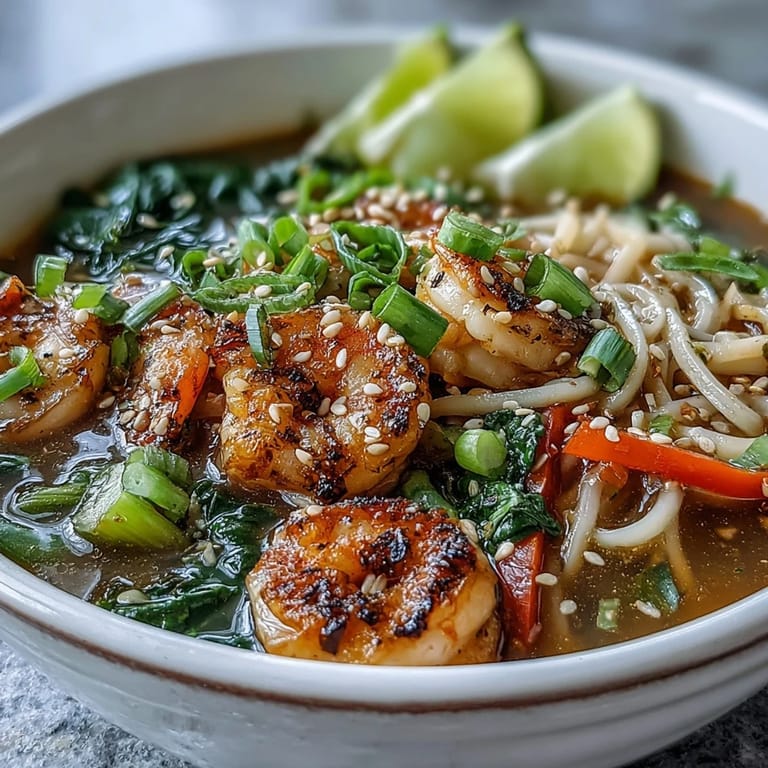
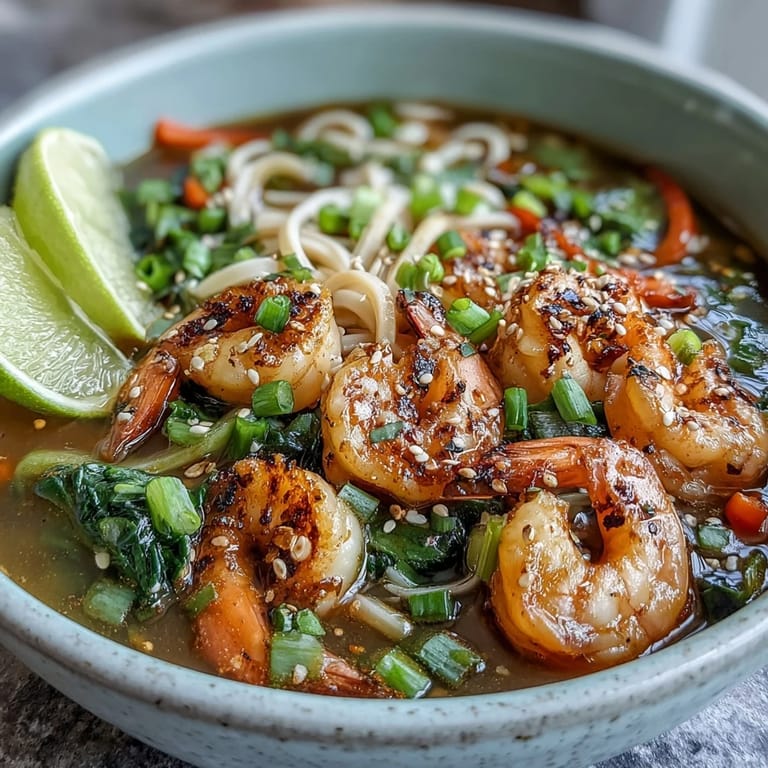
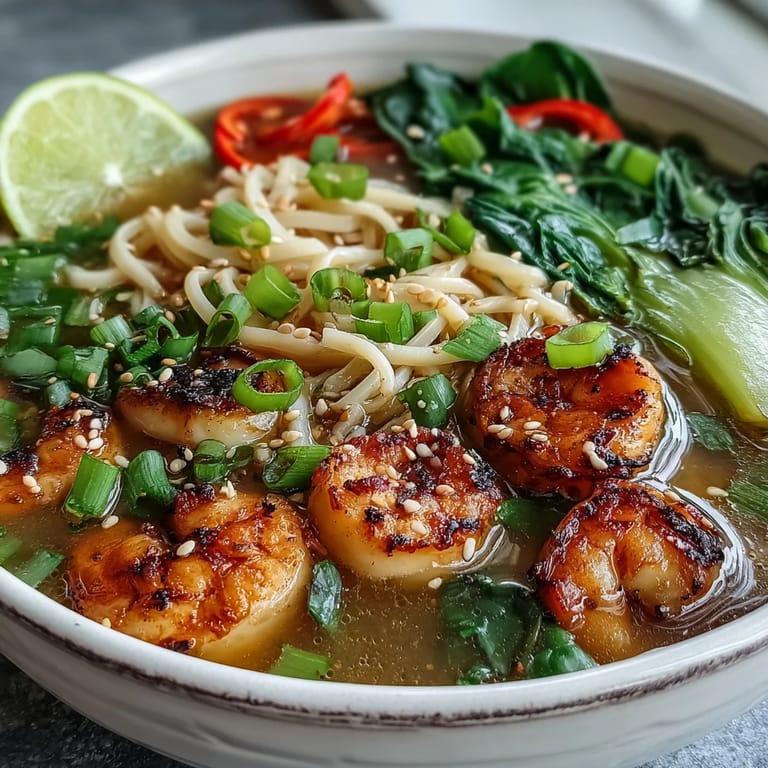
- Divide the cooked noodles among four bowls, then ladle the hot broth, vegetables, and seafood over them generously. The noodles should be mostly submerged but with some peeking through.
- Finish with intention:
- Top each bowl with spring onions, cilantro if using, sesame seeds, and a squeeze of fresh lime juice. This final step transforms a good bowl into something memorable.
 Pin it
 My daughter, who was skeptical about anything involving seafood, took one bite of this bowl and asked if we could have it every Friday. Now it's become our ritual—she helps chop the vegetables, we sip broth together while it simmers, and she's the official taste-tester for seasoning. That's when I realized this recipe gave us something beyond nutrition; it gave us a cooking tradition.
The Magic of Layering Flavors
This bowl works because you're building flavor in stages rather than dumping everything in at once. The sesame oil carries the ginger and garlic into the broth, the soy sauce adds saltiness, the fish sauce adds depth, the vinegar adds brightness—and each ingredient has a moment to matter. When you rush and throw it all in together, you get a muddy bowl instead of something that tastes intentional and alive.
Seafood Selection and Care
The quality of your shrimp and scallops directly affects whether this dish feels special or just adequate. I learned this the hard way by buying pre-cooked shrimp once, thinking it would save time, and ending up with mushy, flavorless seafood that ruined the entire experience. Now I buy raw, pat them dry, and cook them fresh—it takes maybe five extra minutes and transforms everything.
Customizing Your Bowl
This recipe is a template rather than a rule book, so feel free to swap vegetables based on what you have or what's in season. Mushrooms, baby corn, broccoli, or asparagus all work beautifully in this broth, and you're not breaking anything by making those changes. The essential part is respecting the cooking times so nothing becomes overcooked or mushy.
- Keep the broth ratio consistent even if you change vegetables, because the liquid is what makes this a noodle bowl rather than a stir-fry.
- If you're making this vegetarian, use firm tofu pressed and cubed, adding it in the last minute just to warm through.
- Taste your broth after adding vegetables but before seafood, because that's your last chance to adjust seasoning without affecting the final dish.
 Pin it
 This noodle bowl became my answer to the question I asked every weeknight: what can I make that tastes like I spent all day cooking but that I actually have time to finish? It's the kind of meal that reminds you why you love feeding people in the first place.
Recipe FAQ
- → What type of noodles work best?
Rice noodles or soba noodles are ideal for this bowl. Rice noodles have a delicate texture that absorbs the flavorful broth, while soba adds a nutty element. Udon or egg noodles make excellent substitutes if preferred.
- → How do I prevent overcooking the seafood?
Add shrimp and scallops during the final 2-3 minutes of simmering. Watch closely—the seafood turns opaque and firm quickly. Remove from heat immediately once cooked through to maintain tenderness.
- → Can I make this vegetarian?
Absolutely. Omit the seafood and use firm tofu cubes instead. Ensure your broth is vegetable-based rather than chicken. The tofu will absorb the aromatic flavors beautifully while adding protein.
- → How spicy is this dish?
The base version is mild with just aromatic warmth from ginger and garlic. Add chili paste to taste for heat—start with ½ teaspoon and adjust upward. You can also slice fresh chilies as a garnish for those who enjoy spice.
- → Can I prepare components ahead?
Julienned vegetables and the broth base can be prepared a day in advance and refrigerated. Cook noodles and seafood fresh for the best texture. Reheat the broth, add vegetables, then finish with seafood just before serving.
- → What beverage pairs well?
A crisp Riesling cuts through the savory broth beautifully, or try a light lager for a refreshing contrast. For non-alcoholic options, cold jasmine tea or sparkling water with lime complements the Asian flavors.