 Pin it
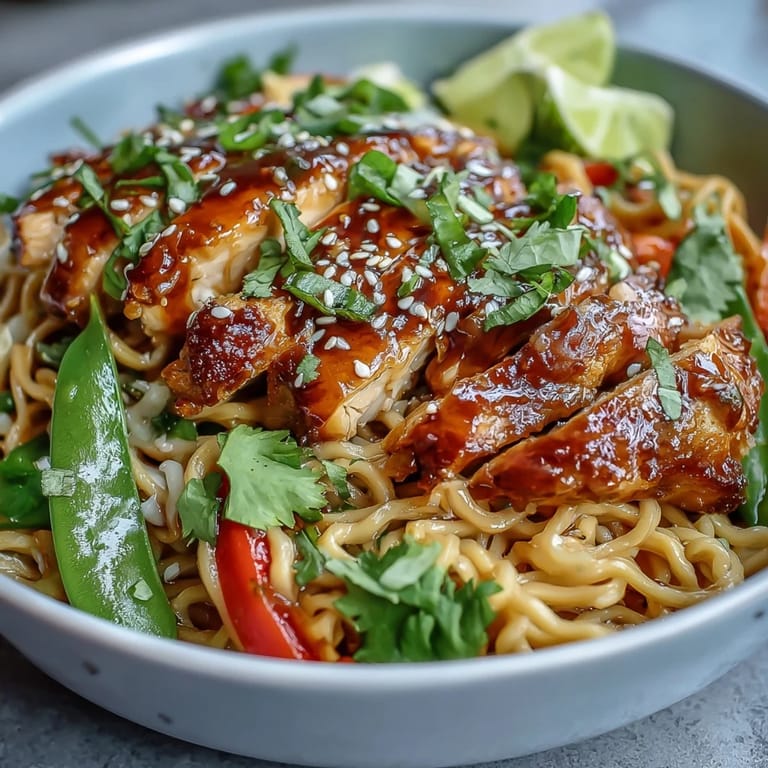
 There's something about a steaming bowl of sesame noodles that stops a weeknight from feeling ordinary. My friend Sarah brought this over one rainy Tuesday, and the kitchen filled with this warm, toasty aroma that made everything feel intentional and special. Since then, I've made it dozens of times—sometimes to impress, sometimes just because I needed something that tastes like care in thirty-five minutes flat. The chicken gets tender, the vegetables stay crisp, and that sauce coats everything with this perfect balance of sweet and savory that keeps you coming back for another bite.
I made this for my partner during our first month of living together, hoping to prove I could cook something beyond scrambled eggs. I was nervous about the timing, worried the chicken would be dry or the vegetables overcooked, but something clicked that night. We ate straight from the bowls while sitting cross-legged on the floor, and halfway through, they looked up and said, 'This is really, really good.' That simple moment made me realize this wasn't just a recipe—it was something I could create whenever I wanted to say 'I made this with intention for you.'
Ingredients
- Boneless, skinless chicken breast or thighs (500g/1 lb), thinly sliced: Thighs stay juicier if you're not paying perfect attention, but breasts cook faster and feel lighter—choose what your mood calls for and slice them thin so they cook quickly and evenly.
- Dried udon, soba, or rice noodles (250g/9 oz): Each type brings its own character to the bowl, so pick whichever you have or whichever sounds good that day.
- Red bell pepper (1), thinly sliced: The sweetness cuts through the savory sauce beautifully, and the color makes the bowl feel vibrant and alive.
- Medium carrot (1), julienned: A julienne cut gives you those satisfying long strands that catch the sauce perfectly.
- Sugar snap peas (100g/3.5 oz), trimmed: They stay crisp when you don't overcook them, which is exactly why they belong in this bowl.
- Spring onions (2), sliced: A fresh finish that adds sharpness right at the end.
- Low-sodium soy sauce (60 ml/4 tbsp): Low-sodium lets you taste the nuance instead of just salt.
- Brown sugar (2 tbsp): This is where the sweetness comes in—it rounds out the ginger and balances the salty soy.
- Toasted sesame oil (1 tbsp): The real hero, bringing that warm, nutty depth that makes people ask 'what is that amazing flavor?'
- Rice vinegar (1 tbsp): Brightness and a gentle tang that ties everything together.
- Fresh ginger, grated (2 tsp): Freshly grated makes a difference—it's peppery and alive compared to jarred.
- Garlic cloves, minced (2): Mince it fine so it dissolves into the sauce rather than sitting as chunks.
- Cornstarch (1 tsp, optional): Use this only if you want the sauce to cling thicker to the noodles—it's not essential, but it changes the texture in a subtle, luxurious way.
- Toasted sesame seeds (2 tbsp) for garnish: Toasted is key—the heat brings out their nutty sweetness and makes them less raw-tasting.
- Fresh coriander or cilantro, chopped: The herbaceous finish that makes you feel like you're eating something restaurant-quality.
- Lime wedges (optional): A squeeze at the end brightens everything up and adds a last-minute pop of complexity.
Tired of Takeout? 🥡
Get 10 meals you can make faster than delivery arrives. Seriously.
One email. No spam. Unsubscribe anytime.
Instructions
- Cook the noodles until just tender:
- Follow the package directions and don't overcook—you want them to have a slight firmness because they'll soften a bit more when you toss them with the warm sauce. Rinse them under cold water right away to stop the cooking and keep them from clumping together.
- Build your sauce while the noodles cook:
- Whisk together the soy sauce, brown sugar, sesame oil, rice vinegar, ginger, garlic, and cornstarch in a small bowl until the sugar dissolves. Taste it straight from the spoon—this is your chance to adjust the balance before everything else gets going.
- Get your pan hot and add the chicken:
- Heat a large nonstick skillet or wok over medium-high heat with a splash of oil. Once it's shimmering, add the sliced chicken and let it sit for a minute or two before stirring so it gets a little color and develops flavor.
- Cook the chicken through without fussing:
- About 4-5 minutes total, stirring occasionally, until there's no pink inside and the edges are golden. This is when your kitchen smells absolutely incredible.
- Stir-fry the vegetables until they're bright and just barely tender:
- Add a little more oil if the pan looks dry, then add the bell pepper, carrot, and snap peas. Keep them moving for 2-3 minutes—you want them to stay crisp with a bit of bite, not soft.
- Bring everything back together in the pan:
- Return the chicken to the pan, pour in that sauce you made earlier, and toss everything so every piece gets coated. Simmer for 1-2 minutes and watch as the sauce thickens slightly and becomes glossy.
- Add the noodles and spring onions and toss until hot:
- This is where the bowl comes together—the noodles absorb some of the sauce, and the spring onions add a fresh bite. Heat everything through for a minute so the flavors meld.
- Divide into bowls and finish with purpose:
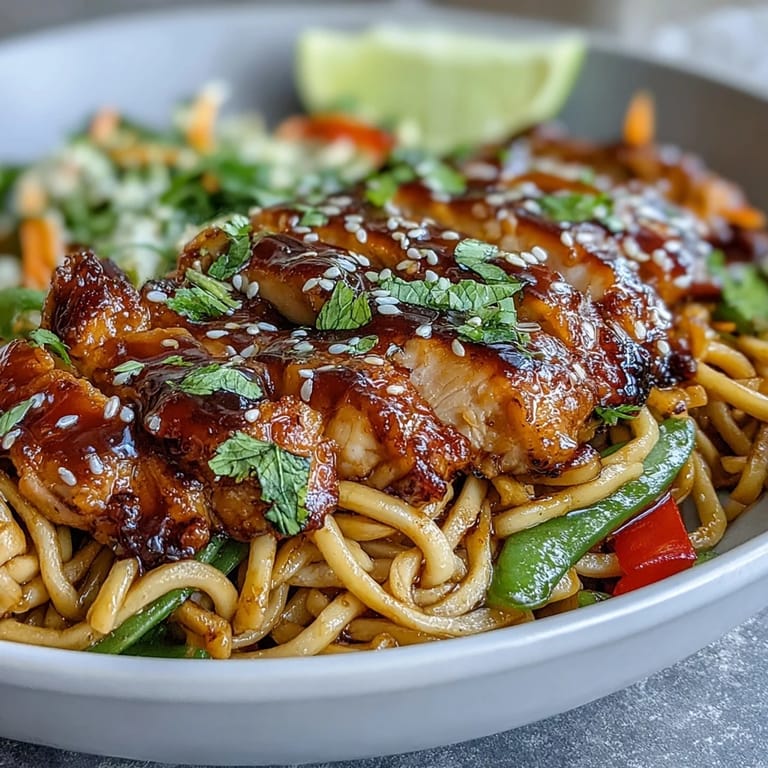
- Scatter sesame seeds across the top, sprinkle with fresh cilantro, and add a lime wedge if you're using one. The garnishes aren't just decoration—they're flavor and texture that complete the whole experience.
 Pin it
 One afternoon, my neighbor came over with a stress fracture in her foot and absolutely no appetite for anything that required effort. I made this bowl for her, and watching her sit on my kitchen stool with a fork and a genuine smile on her face for the first time in days reminded me that sometimes the most nourishing thing food can do is show up exactly when someone needs it. That's what this bowl has become for me—reliable, uncomplicated, and quietly restorative.
The Sesame Oil Secret
Sesame oil is the difference between a sauce that tastes like soy and brown sugar and one that tastes like something special. I learned this the hard way when I made this recipe once with regular vegetable oil and couldn't figure out why it tasted flat. The sesame oil brings this warm, toasty nuttiness that makes people lean in closer and ask what's in it. A little goes a long way—you don't need much, and it's worth buying the good stuff. Store it in a cool, dark place because the flavors fade if it sits around getting warm.
Variations That Actually Work
This recipe is flexible enough to follow whatever's in your kitchen or whatever you're craving that day. Tofu works beautifully if you want to skip the chicken—cut it into thick slices, pan-fry it until it's golden, and treat it the same way. Broccoli, mushrooms, bok choy, or even thinly sliced cabbage all work here. You can make it spicier by adding red chili flakes to the sauce, or sweeter by adding another half tablespoon of brown sugar. The bones of the recipe are strong enough to handle whatever personality you want to give it.
Making It Feel Special
There's something about serving this in an actual bowl instead of on a plate that makes it feel intentional and cared-for. Warm your bowls in the oven for two minutes before you divide the noodles if you want to keep everything hot a little longer. The contrast between the warm noodles, the crisp vegetables, and the creamy sauce creates this perfect balance that keeps you interested all the way through the bowl. Here are the finishing touches that make the biggest difference:
- Toast your sesame seeds fresh in a dry pan for just a minute or two—they go from nutty to absolutely incense-like in their intensity.
- Squeeze fresh lime juice right over the top just before you eat, so the citrus is bright and present rather than sitting and mellowing out.
- Don't skip the cilantro, even if you think you're not a cilantro person—the herbaceous freshness is the exclamation point on every bite.
 Pin it
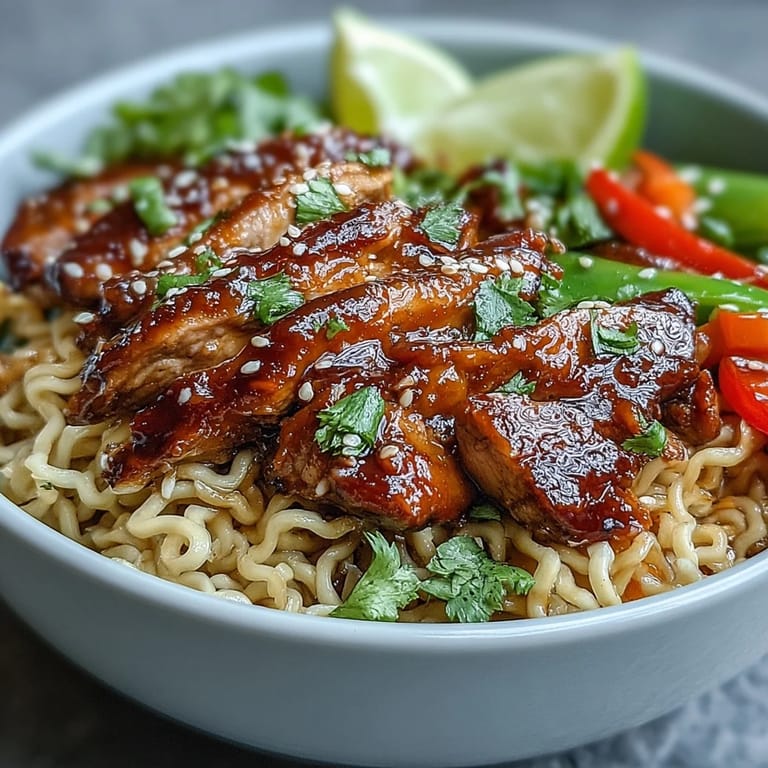
 This bowl has become the recipe I reach for when I want something that feels both comforting and exciting, something that tastes intentional but doesn't require a long list of exotic ingredients or technical skill. Make it once and it becomes yours—adjust it, adapt it, make it at midnight or serve it to people who matter. That's what good recipes do.
Recipe FAQ
- → What type of noodles work best?
Udon, soba, or rice noodles all work beautifully here. Udon offers a chewy texture that holds up well in the sauce, while soba adds a nutty flavor. Rice noodles are lighter and gluten-free when paired with tamari instead of soy sauce.
- → Can I make this ahead?
You can prep the ingredients in advance—slice the chicken and vegetables, whisk the sauce, and cook the noodles. Store everything separately in the refrigerator for up to 24 hours. When ready to serve, simply stir-fry and toss everything together.
- → How do I adjust the sauce consistency?
If you prefer a thicker sauce, add the optional teaspoon of cornstarch when whisking the ingredients together. For a thinner consistency, simply omit the cornstarch. The sauce naturally thickens slightly as it simmers in the pan.
- → What vegetables can I substitute?
Broccoli florets, sliced mushrooms, shredded cabbage, or baby corn would all be excellent additions or substitutions. The key is to maintain a mix of colors and textures for visual appeal and variety in every bite.
- → Is this suitable for meal prep?
Absolutely. Portion the finished dish into airtight containers and store in the refrigerator for up to 3 days. Reheat gently in the microwave or a warm skillet, adding a splash of water if the sauce has thickened too much.
- → Can I use chicken thighs instead of breast?
Yes, chicken thighs work wonderfully and often stay juicier during stir-frying. Just be sure to trim excess fat and slice them into thin, even pieces so they cook through evenly alongside the vegetables.