 Pin it
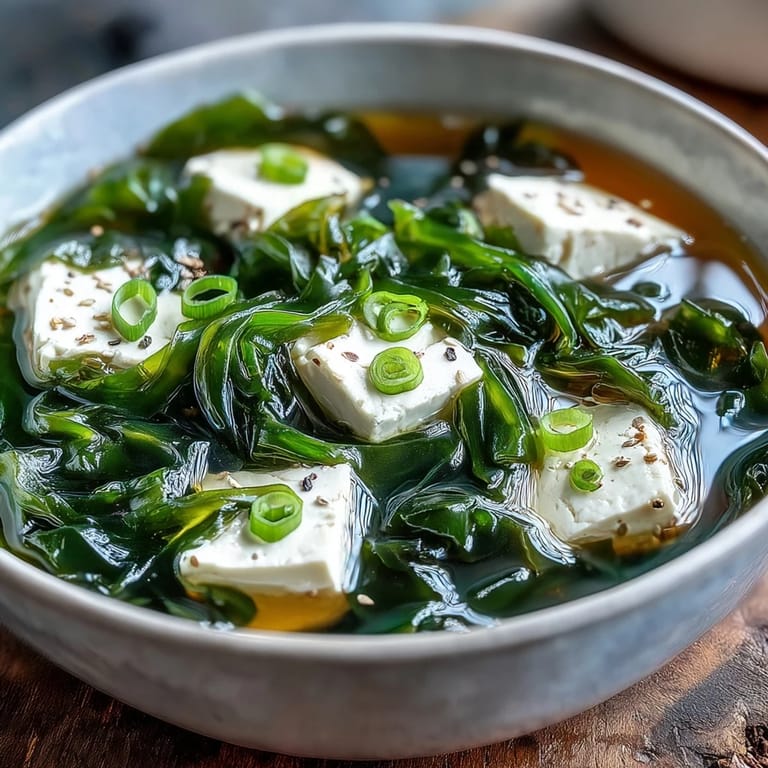
 My neighbor handed me a bowl of wakame soup on a grey Tuesday morning, steam rising into the cold air, and I realized I'd been missing something essential in my cooking repertoire. The broth was impossibly clear, the seaweed tender, the tofu barely needing to be chewed. She said it took her twenty minutes total, and suddenly this humble soup felt like a gift I could actually give myself on any ordinary day.
I made this for my partner when they came home from a long shift, and they actually paused between spoonfuls to look at the bowl like it held something more than soup. That's when I understood the magic of dashi, how a simple broth can carry so much attention and care in each sip.
Ingredients
- Dried wakame seaweed: At just 8 grams, this becomes silky and tender in minutes, bringing iodine and ocean minerals without any fishiness if you treat it gently.
- Dashi stock: Use the vegetarian version made from kombu and shiitake mushrooms, or make your own, because the quality of this foundation determines whether your soup tastes like restaurant-level comfort or an afterthought.
- Silken or firm tofu: Silken disappears on your tongue while firm gives you something to chew; choose based on your mood and what texture you're craving that day.
- Scallions: These brighten everything at the last second, adding a whisper of sharpness that keeps the soup from feeling too mild.
- White miso paste: This is where all the umami lives, so resist blending it straight into the broth and instead temper it first with hot liquid, a lesson I learned the hard way by creating grainy soup.
- Soy sauce: A teaspoon feels small until you taste how it deepens every other flavor without announcing itself.
- Sesame oil: Optional but not really, because those few drops add a roasted depth that transforms ordinary into memorable.
Tired of Takeout? 🥡
Get 10 meals you can make faster than delivery arrives. Seriously.
One email. No spam. Unsubscribe anytime.
Instructions
- Awaken the seaweed:
- Soak your dried wakame in a small bowl of cold water for five minutes, watching it bloom and soften into something you'd actually want to eat. You'll know it's ready when it feels tender but still has a gentle chew to it.
- Build your broth base:
- Pour your dashi into a medium saucepan and let it warm over medium heat until small bubbles begin to break the surface. Listen for that gentle simmer sound rather than a rolling boil, which would damage the delicate flavors you're about to create.
- Add the quiet ingredients:
- Drain your wakame and add it to the pot along with your cubed tofu, then let everything warm together for two to three minutes. The tofu will bob around like it's taking a warm bath, and the seaweed will continue opening up, releasing its mineral sweetness into the broth.
- Miso moment:
- In a separate small bowl, scoop out a ladle of the hot broth and whisk your miso paste into it until completely smooth and creamy. This tempering step prevents clumps and keeps your soup silky rather than grainy, trust me on this one.
- Bring it together:
- Pour your smooth miso mixture back into the pot and stir gently, then add the soy sauce and sesame oil if you're using it. Let everything meld for one more minute over gentle heat, but do not let it boil or you'll lose the miso's subtle complexity.
- Finish and serve:
- Pour your soup into bowls and crown each one with the sliced scallions, which will wilt slightly from the heat and release their sharpness into every spoonful. Serve immediately while the steam is still rising and the warmth reaches you before the flavor does.
 Pin it
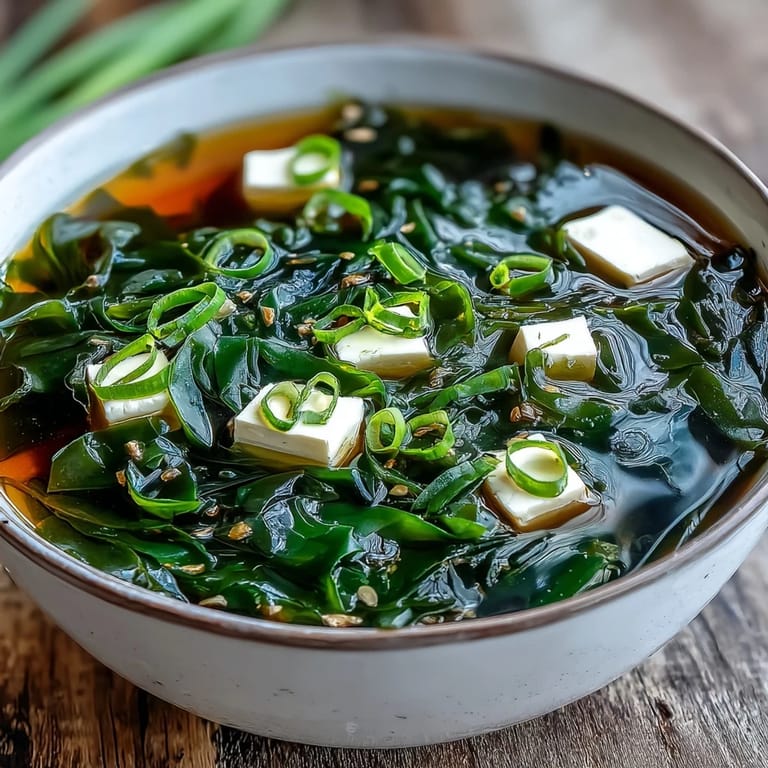
 There was an evening when my daughter asked for seconds of this soup, and I realized she was choosing this quiet, mineral-rich bowl over everything else I could offer her. It became our ritual after that, something we made together on nights when we both needed the world to slow down.
The Alchemy of Dashi
Dashi is the backbone of Japanese cooking, and once you understand how to build it, you'll start using it everywhere. The vegetarian version made from kombu and dried shiitake is just as complex as the traditional fish-based versions, carrying umami and depth that makes even the simplest soup feel like someone spent hours crafting it for you. I keep my dashi in the freezer now, portioned into ice cube trays, so I always have the foundation ready whenever inspiration strikes.
Wakame and Your Body
Seaweed gets a reputation for being unfamiliar or intimidating, but wakame specifically is approachable and even subtle in flavor once you taste it prepared correctly. It's been feeding people for centuries in Japan, and modern science keeps confirming what they already knew about iodine, minerals, and the way seaweed supports thyroid health and energy. The amount in this soup is gentle enough for daily eating, without any of the mineral heaviness you might experience from other varieties.
Making This Soup Your Own
The beauty of this recipe is how it becomes a canvas for whatever you have on hand or whatever your body is asking for that day. I've added paper-thin mushroom slices, delicate spinach leaves, even shredded carrots, and every version tastes right. The dashi and miso are flexible enough to carry whatever vegetables you choose, as long as you respect the cooking times and don't crowd the pot or muddy the clarity of the broth.
- Try adding a few shiitake mushrooms alongside the wakame for deeper, earthier richness.
- A handful of fresh spinach wilts into the soup in the final minute and adds vibrant color without changing the flavor profile.
- Remember that this soup reheats beautifully the next day, though add fresh scallions and sesame oil after heating rather than before, to keep those flavors bright and alive.
 Pin it
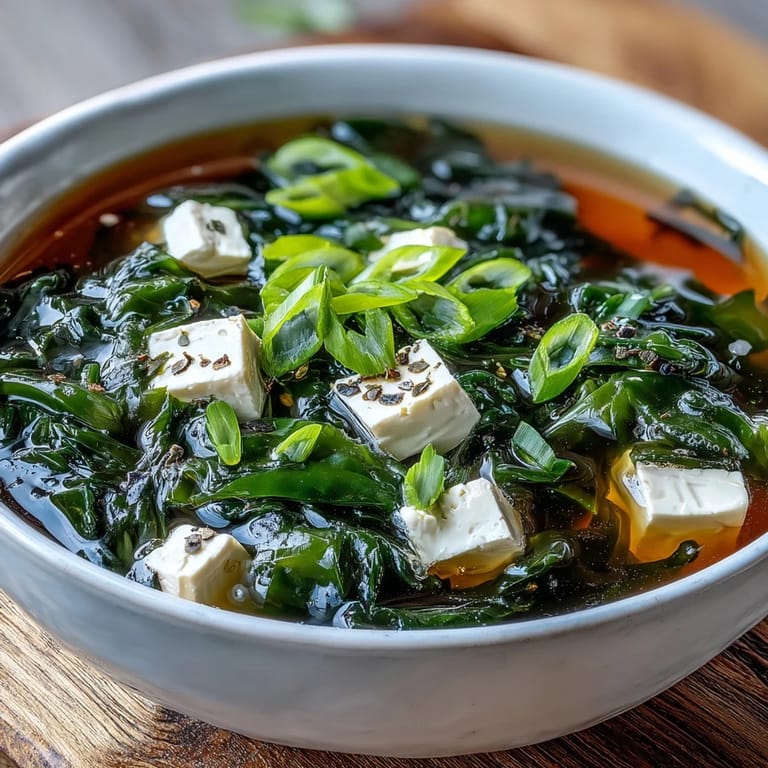
 This soup has become my answer to the question nobody asks but everyone feels: how do we nourish ourselves gently in the middle of an ordinary day? It's the kind of recipe that reminds you that simplicity and care are not opposites.
Recipe FAQ
- → What does wakame taste like?
Wakame has a mild, slightly sweet flavor with a delicate ocean essence. When rehydrated, it becomes tender and adds a pleasant texture to broths without overpowering other ingredients.
- → Can I use other types of seaweed?
While wakame is traditional, you can substitute with kombu (kelp) or nori. Keep in mind that kombu requires longer simmering to soften, while nori will dissolve more quickly in hot liquid.
- → How do I store leftover soup?
Store in an airtight container in the refrigerator for up to 2 days. The wakame will continue to soften and may become slippery. Reheat gently without boiling to preserve the miso's beneficial enzymes.
- → Is this soup gluten-free?
Yes, when made with gluten-free soy sauce and certified gluten-free miso paste. The dashi stock should also be verified if using commercial varieties, though homemade kombu dashi is naturally gluten-free.
- → Can I make this vegan?
Absolutely. Use kombu and shiitake mushroom dashi instead of fish-based dashi stock. Ensure the miso paste is made without bonito flakes, which some traditional varieties include.
- → Why shouldn't I boil the miso?
Boiling miso paste can destroy its beneficial probiotics and enzymes, while also creating a slightly bitter taste. Always dissolve miso in warm liquid off the heat or add it at the very end of cooking.