 Pin it
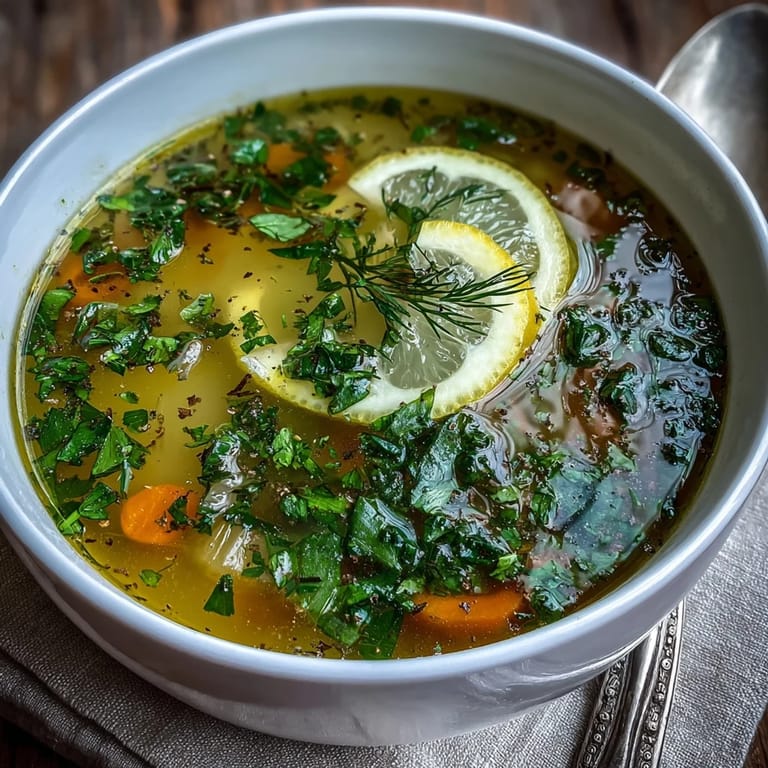
 My neighbor handed me a bowl of this soup on a Tuesday morning when I wasn't feeling great, and I remember being struck by how the steam carried this bright, almost floral scent up to my face. That single spoonful—the warmth, the citrus hitting first, then those whispers of fresh herbs—made me sit up straighter. I've made it dozens of times since, and it never fails to feel like someone's taking care of me, even when I'm the one doing the cooking.
I made this for a dinner party last spring when everyone was tired of heavy food, and one guest actually closed their eyes after her first spoonful. She asked for the recipe before dessert even arrived. It became the thing I reach for when I want to impress people without spending hours in the kitchen, or when someone needs something that feels both nourishing and gentle.
Ingredients
- Olive oil (1 tablespoon): Use good quality oil here—it's one of the few fats in the soup, so it carries flavor. I learned to add it cold to the pot before the heat builds, so it coats everything evenly.
- Onion (1 medium, finely chopped): The foundation. Chop it small so it dissolves almost completely into the broth, creating body without chunks.
- Garlic cloves (2, minced): Mince finely and add after the onion has softened, otherwise it burns and tastes harsh—a lesson learned the hard way.
- Carrots and celery (2 medium carrots and 2 stalks, diced): These give the soup its gentle sweetness and weight. Don't skip them even though they seem basic.
- Vegetable broth (5 cups, low sodium): Low sodium lets the lemon and herbs shine instead of fighting saltiness. I taste the broth alone first to know where I'm starting.
- Lemon zest and juice (1 zest, 2 lemons' juice): The soul of this soup. Zest goes in partway through so it doesn't lose its bright oils, and fresh lemon juice—not bottled—makes all the difference.
- Fresh herbs (parsley, dill, chives, thyme): These aren't garnishes here; they're the main event. Buy them fresh if you can. Frozen works, but fresh herbs add that alive quality that makes people ask for seconds.
- Cooked rice or orzo (½ cup, optional): Add this if you want the soup to feel more substantial. I often skip it and let the herbs be the star instead.
- Salt and black pepper: Taste as you go. The broth is already seasoned, so you're really just balancing and brightening at the end.
Tired of Takeout? 🥡
Get 10 meals you can make faster than delivery arrives. Seriously.
One email. No spam. Unsubscribe anytime.
Instructions
- Warm your oil and build your base:
- Heat the olive oil over medium heat and add the chopped onion, listening for that gentle sizzle. Stir occasionally and let it turn translucent and soft, about 3 minutes—you'll know it's ready when you can press a piece against the side of the pot and it practically melts.
- Add depth with aromatics and vegetables:
- Stir in the minced garlic, then the carrots and celery right after, keeping everything moving for about 5 minutes until the raw edge softens. You should smell something warm and inviting—that's your signal you're on track.
- Build the liquid base:
- Pour in your vegetable broth and bring the whole thing to a boil—watch for the bubbles to break the surface actively. Once it's boiling, turn the heat down to a simmer and let it bubble gently for 10 minutes, which gives the vegetables time to really soften and flavor the broth.
- Wake it up with citrus and herbs:
- This is the moment everything changes. Stir in the lemon zest, fresh lemon juice, and all your chopped herbs at once. The kitchen will smell incredible, and let it simmer for another 5 minutes so the flavors marry but the herbs don't fade completely.
- Optional thickening, final balance:
- If you're using rice or orzo, add it now and let everything heat through for 2 to 3 minutes. Taste the soup and adjust the salt and pepper—remember that it should taste bright first, savory second.
- Serve with intention:
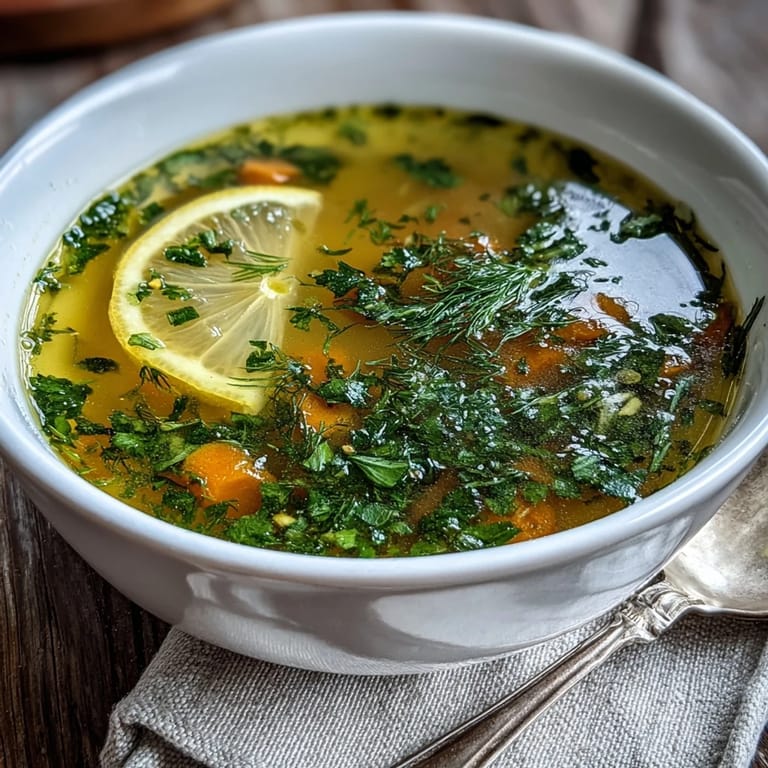
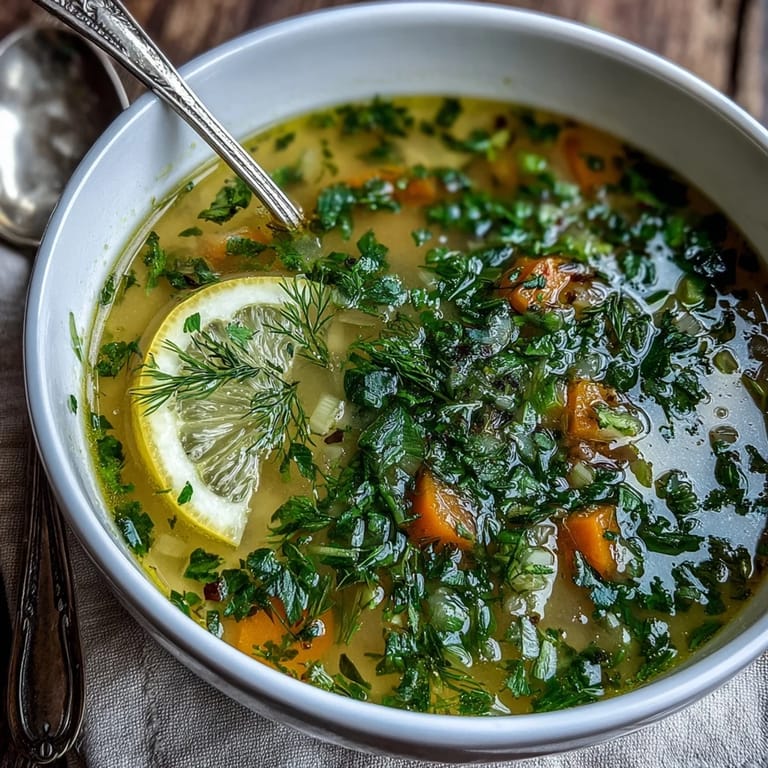
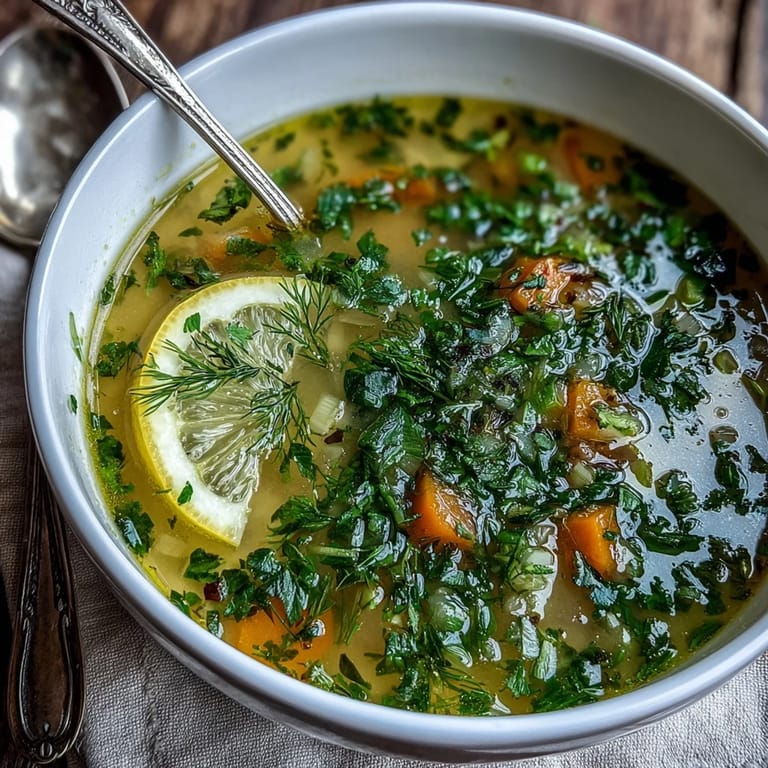
- Ladle it into bowls while it's still steaming and top with extra fresh herb bits and maybe a thin slice of lemon. The heat helps release even more of those fresh herb aromas, so serve it right away.
 Pin it
  Pin it
 There's something almost meditative about making this soup on a day when you need comfort but not heaviness. I've found myself making it on Sundays when I want my kitchen to smell alive without effort, and then I have something healing to reach for all week.
Flavor Swaps That Actually Work
Once I understood the skeleton of this soup, I started experimenting. Swap the dill for fresh tarragon or basil if that's what's in your garden or farmers market—the structure stays the same but the personality completely shifts. I've also added a handful of baby spinach at the very end and let it wilt right in the hot broth, which adds color and nutrition without changing the character of what makes this soup special.
Making It Feel Like a Meal
On its own, this is a delicate opening act. But I've learned that when you want it to be dinner instead of just an appetizer, there are quiet additions that elevate it without overshadowing what makes it work. Adding that cooked rice or orzo gives your spoon something to rest on, and suddenly it feels more grounded. A grilled piece of crusty bread on the side, maybe rubbed with garlic, turns it into something complete.
The Real Secret Here
The real magic is in the restraint. This soup doesn't shout; it whispers. Everything is present but balanced, nothing dominates, and that's why it works whether someone's nursing a cold or you're serving it at a dinner party. It respects the ingredients and the person eating it.
- Make the broth the day before if you can—the flavors actually settle and become more cohesive overnight.
- Zest your lemon before you juice it, or you'll be left holding half a lemon wishing you'd planned better.
- Taste obsessively as you cook. This soup rewards small adjustments and punishes assumptions.
 Pin it
  Pin it
 This soup has become my answer to almost every cooking question—easy enough for a Tuesday, elegant enough for guests, and kind enough for hard days. Make it once and you'll understand why.
Recipe FAQ
- → Can I make this soup ahead of time?
Yes, this soup stores well in the refrigerator for up to 3 days. The lemon flavor may intensify over time, so you might want to adjust the citrus level when reheating. Add fresh herbs just before serving for the best flavor and color.
- → What can I substitute for fresh herbs?
While fresh herbs provide the best flavor, you can use dried herbs in a pinch. Use about one-third the amount of dried herbs compared to fresh. Add dried herbs earlier in the cooking process to allow their flavors to develop fully.
- → How can I make this soup more filling?
Add cooked rice, orzo, or small pasta for extra heartiness. You can also incorporate white beans, chickpeas, or shredded chicken. For a creamier texture, stir in a dollop of Greek yogurt or a splash of cream just before serving.
- → Can I freeze lemon herb soup?
This soup can be frozen for up to 2 months, though the texture of vegetables may soften slightly upon thawing. Freeze without the rice or orzo and add fresh when reheating. The lemon flavor remains bright even after freezing.
- → What vegetables work well in this soup?
Beyond the base vegetables, try adding zucchini, spinach, kale, or green beans. Potatoes can add body, while peas bring sweetness. Add heartier vegetables earlier in cooking and delicate greens near the end to preserve their texture and color.
- → How do I prevent the soup from becoming too sour?
Start with less lemon juice than called for and adjust to taste at the end. The acidity can be balanced with a pinch of sugar or honey if needed. Remember that the flavors will concentrate as the soup simmers, so taste frequently.