 Pin it
 There's something almost magical about the smell of garlic transforming in the oven—it goes from pungent and sharp to something sweet and almost caramel-like. I discovered this soup on a particularly gray afternoon when I needed something that felt both comforting and a little bit special, and roasted garlic seemed like the answer to make something humble feel luxurious. The first spoonful convinced me that sometimes the simplest ingredients, treated with a little patience, become something you'll crave on repeat.
My friend Sarah came over on a chilly evening when we were both pretending we didn't need comfort food, and I made this soup almost without thinking. Watching her face light up at that first spoonful—that moment when you realize you've made something someone will actually remember—that's when I knew this recipe was worth keeping close.
Ingredients
- 3 whole heads garlic: Roasting mellows the intensity completely, turning it into something sweet and buttery that anchors the whole soup.
- 1 large yellow onion, chopped: This becomes the aromatic base that ties everything together with gentle sweetness.
- 2 medium Yukon Gold potatoes, peeled and diced: These create the creamy texture without needing heavy cream, and they dissolve beautifully into the blender.
- 2 stalks celery, chopped: Celery adds subtle depth and helps build that foundational savory flavor.
- 1 medium carrot, chopped: A touch of natural sweetness that balances the earthiness of the roasted garlic.
- 2 tbsp fresh thyme leaves (or 2 tsp dried): Fresh thyme makes a noticeable difference here, but dried works in a pinch—just use less since it's more concentrated.
- 2 tbsp fresh parsley, chopped: Don't skip this; it brightens the whole thing and keeps it from feeling too heavy.
- 1 bay leaf: Adds a subtle herbal note that you'll miss if you forget it, so don't.
- 1 tsp dried oregano: A small amount keeps things from tasting one-dimensional while staying in the background.
- 1/2 tsp freshly ground black pepper: Freshly ground makes all the difference—the aroma alone tells you why.
- 1 tsp salt: Start here and taste as you go, because everything intensifies when you blend it.
- 1.5 liters vegetable broth: Use something you'd actually drink on its own, because it becomes the soul of this soup.
- 2 tbsp olive oil: One tablespoon goes with the garlic for roasting; the rest becomes your cooking base.
- 2 tbsp unsalted butter (optional, for richness): I don't always use it, but when I do, it makes the soup feel indulgent without overwhelming the delicate garlic flavor.
- 2 tbsp fresh chives or parsley, finely chopped: This garnish isn't optional in my book—it adds brightness and a fresh bite right at the end.
Tired of Takeout? 🥡
Get 10 meals you can make faster than delivery arrives. Seriously.
One email. No spam. Unsubscribe anytime.
Instructions
- Roast your garlic until it smells like possibility:
- Slice the tops off your garlic heads to expose the cloves, then drizzle with about a tablespoon of olive oil and wrap loosely in foil. Roast at 400°F for 35 to 40 minutes—you'll know it's ready when the cloves are soft enough to squeeze right out of their papery skins and the whole thing smells almost sweet. This is where the magic happens.
- Build your aromatics foundation:
- In a large pot, warm the remaining olive oil and butter over medium heat, then add your chopped onion, celery, and carrot. Let them soften for about 5 to 7 minutes, stirring occasionally—you want them tender and fragrant but not browned.
- Combine everything and let the flavors get acquainted:
- Squeeze those gorgeous roasted garlic cloves into the pot, then add the diced potatoes, fresh thyme, parsley, bay leaf, oregano, salt, and pepper. Give everything a good stir so the seasonings distribute evenly, then pour in your vegetable broth.
- Simmer until the potatoes surrender:
- Bring the whole pot to a boil, then lower the heat and let it simmer gently for about 20 minutes until the potatoes are completely tender when you poke them with a fork. This is a good time to step away and do something else—the soup is mostly handling itself now.
- Transform it into something silky:
- Remove the bay leaf, then use an immersion blender to purée everything until smooth and creamy, or carefully transfer batches to a regular blender and blend until you get the texture you want. If you go the blender route, be careful with hot soup—never fill it more than halfway and always let it cool slightly first.
- Taste and adjust, because you're the one eating it:
- Give the soup a taste and add more salt, pepper, or herbs if it needs them. This is your soup, so make it taste the way you want it to.
- Finish it with intention:
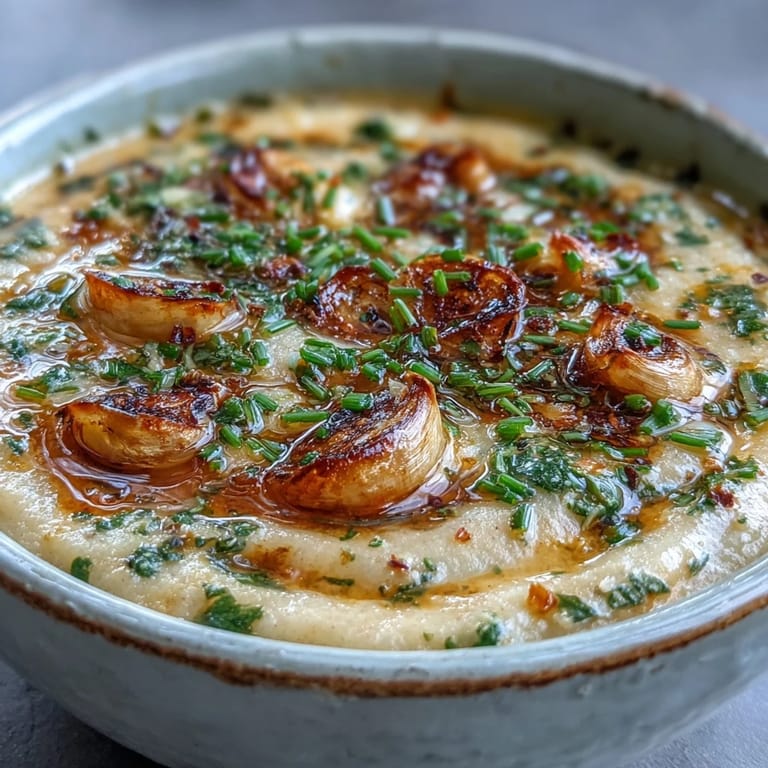
- Ladle into bowls, scatter fresh chives or parsley over the top, and serve immediately with crusty bread if you want it. The contrast of the warm, silky soup with the crispy bread is honestly one of life's small perfect moments.
 Pin it
  Pin it
 There was a night when my grandmother tried this soup and told me it tasted like someone had captured the essence of comfort in a bowl, and that's exactly when I stopped thinking of it as just a recipe and started thinking of it as something with real meaning. Food that makes people feel seen and cared for—that's the whole point, isn't it?
The Secret Life of Roasted Garlic
Roasting garlic is honestly one of the most underrated kitchen techniques out there. The heat transforms the sulfur compounds that make raw garlic sharp and sometimes unpleasant into something that tastes almost like a gentle, creamy paste with hints of nuttiness. Once you've done this once, you'll start roasting garlic for everything—spread it on toast, mix it into butter, toss it into pasta. It's one of those kitchen moves that feels simple but changes how you think about cooking.
Texture and the Art of Blending
The consistency of this soup should feel luxurious and smooth, almost like silk on your tongue. Some people prefer it completely velvety, while others like a tiny bit of texture from the vegetables still peeking through. If you're using an immersion blender, you have more control—just keep pulsing until you get where you want to be. With a regular blender, you might end up smoother than you expected, but that's not a bad thing here.
Making It Your Own
This recipe is solid as written, but it also invites you to play around and make it speak to your kitchen. Want to add a splash of cream for richness or a hint of nutmeg for warmth? Go for it. Thinking about a drizzle of truffle oil or some crispy sage on top? The roasted garlic base is strong enough to support whatever you want to do with it. That's the beauty of having a really good foundation—you can build whatever you want on top.
- A touch of paprika adds subtle smokiness if you want a little more depth.
- Fresh dill scattered on top at the end brings a bright, almost citrusy note.
- Some crusty bread for dipping isn't optional when you're really trying to make this moment count.
 Pin it
  Pin it
 This soup reminds me why I cook—because sometimes the most meaningful moments happen when you take a few simple things and turn them into something that nourishes both the body and whatever part of someone's heart needed nourishing that day. I hope you make this and discover your own reason to keep coming back to it.
Recipe FAQ
- → Can I make this soup ahead of time?
Yes, this soup stores beautifully in the refrigerator for up to 4 days. Reheat gently on the stovetop, adding a splash of broth if needed to adjust consistency. The flavors often deepen after a day.
- → What can I substitute for Yukon Gold potatoes?
Russet potatoes or any starchy variety work well for creating a creamy texture. You can also use cauliflower for a lower-carb alternative that still provides body when blended.
- → How do I prevent the garlic from burning during roasting?
Ensure the garlic heads are well-wrapped in foil with a drizzle of olive oil. Roast at 400°F and check after 35 minutes. The cloves should be golden and soft, not dark brown.
- → Can I freeze this soup?
Absolutely. Cool completely, then freeze in airtight containers for up to 3 months. Thaw overnight in the refrigerator and reheat gently, stirring occasionally to restore the smooth texture.
- → What herbs can I use if I don't have fresh thyme?
Dried thyme works perfectly at a 1:3 ratio to fresh. You can also experiment with rosemary, sage, or tarragon for different flavor profiles while maintaining the aromatic quality.
- → How can I make this soup richer without dairy?
Add coconut cream, cashew cream, or a drizzle of quality olive oil before serving. Blending in cooked white beans also creates luxurious creaminess while adding protein.