 Pin it
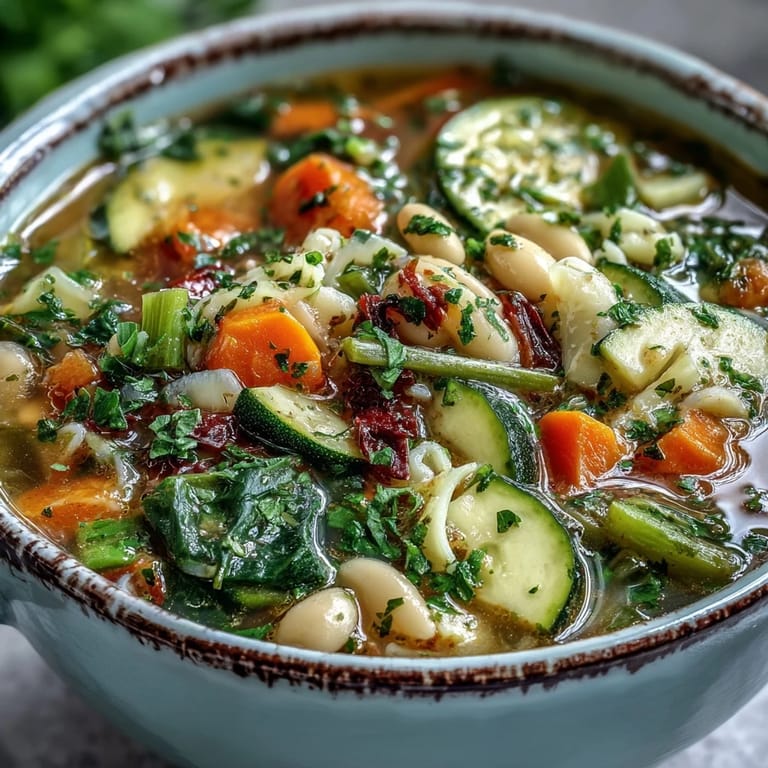
 My neighbor Marco taught me that minestrone isn't a recipe you memorize, it's a conversation you have with your garden or market basket. One Saturday morning, while he chopped vegetables with the kind of speed that comes from decades of practice, he explained that this soup exists to celebrate whatever is freshest that day. I watched him toss summer zucchini into the pot one week, then butternut squash the next, and suddenly I understood: minestrone is permission to cook what you have, not what a book tells you to have.
I made this soup on a gray Tuesday evening when my refrigerator felt disappointingly empty, and somehow by the time it finished simmering, our kitchen smelled like an Italian grandmother had been cooking all day. My daughter came home from school, dropped her backpack by the door, and asked if I'd been planning this meal. That's when I realized minestrone had become the soup I reach for when I want to feel like I've done something right in the kitchen without spending hours there.
Ingredients
- Olive oil: Start with good oil here, the kind you actually enjoy tasting, because it's one of the few pure flavors that shines through in this simple soup.
- Onion, carrots, and celery: This trio is called the soffritto, and it's the foundation that makes everything taste deeper and more intentional.
- Garlic: Mince it fresh and add it after the soffritto softens, so it doesn't turn bitter and sharp.
- Zucchini or butternut squash: Use whatever season offers, or mix them if you're feeling flexible about the rules.
- Green beans, kale, or spinach: This is where color and texture come in, so don't skip it even if you think you will.
- Diced tomatoes: Canned tomatoes are your friend here, and they actually have more flavor than fresh tomatoes out of season.
- Potato: Add this if you want the soup thicker and more substantial, or leave it out if you prefer something lighter.
- Vegetable broth: This is the backbone, so taste it before you buy it if you can; some broths taste like nothing.
- Cannellini or borlotti beans: Rinse them well so the soup stays clear and bright instead of cloudy.
- Small pasta: Ditalini, elbow, or small shells work because they cook in minutes and won't get mushy.
- Bay leaf, oregano, and basil: These three are not optional, they're what makes this taste Italian and not just vegetable broth.
- Fresh parsley: Save this for the end, scattered on top where its fresh green flavor won't get buried.
- Parmesan cheese: Optional, but the salty umami finish transforms each spoonful.
Tired of Takeout? 🥡
Get 10 meals you can make faster than delivery arrives. Seriously.
One email. No spam. Unsubscribe anytime.
Instructions
- Build your base with oil and aromatics:
- Warm olive oil in a large pot over medium heat, then add your diced onion, carrots, and celery. Let them soften together for about five minutes, stirring occasionally, until the kitchen starts to smell alive and the vegetables begin to turn tender at the edges.
- Introduce the rest of your vegetables:
- Stir in your minced garlic and whatever vegetables you've chosen for this season, whether that's bright green zucchini or deep orange squash. Cook for three minutes until the garlic becomes fragrant and everything starts to know each other.
- Add tomatoes and build the broth:
- Pour in your canned tomatoes and potato if you're using one, let them cook for just a couple of minutes to meld, then add your bay leaf and vegetable broth. The pot will look full and promising at this moment.
- Simmer until vegetables soften:
- Bring everything to a boil, then lower the heat and let it simmer gently for fifteen minutes. You're not rushing here, you're letting the vegetables become tender and the flavors begin to deepen.
- Add the beans and pasta:
- Drain and rinse your beans, then add them to the pot along with your small pasta. Let everything simmer uncovered for ten to twelve minutes, stirring occasionally, until the pasta is tender but still has a slight firmness and the vegetables have softened completely.
- Season and finish:
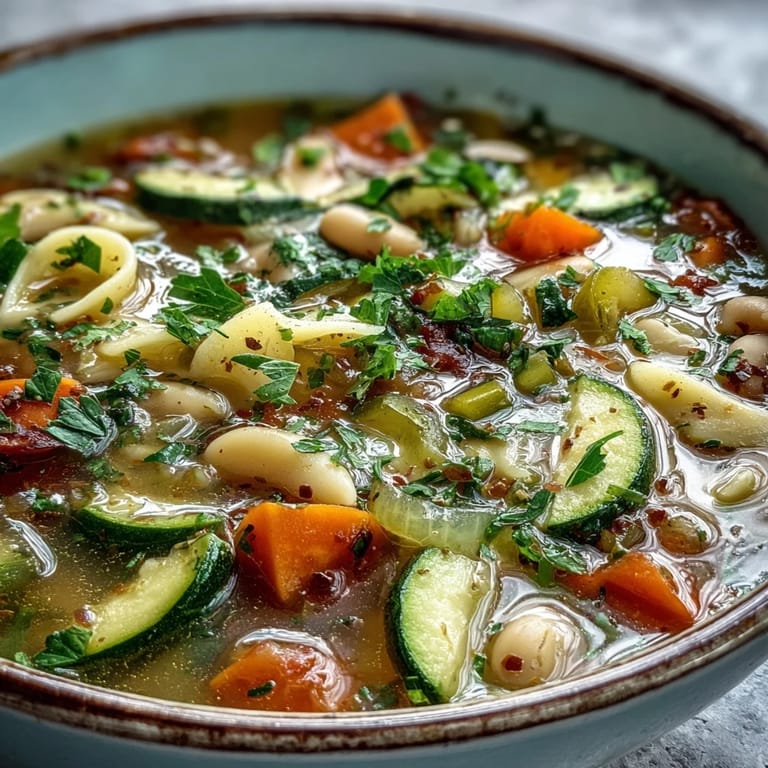
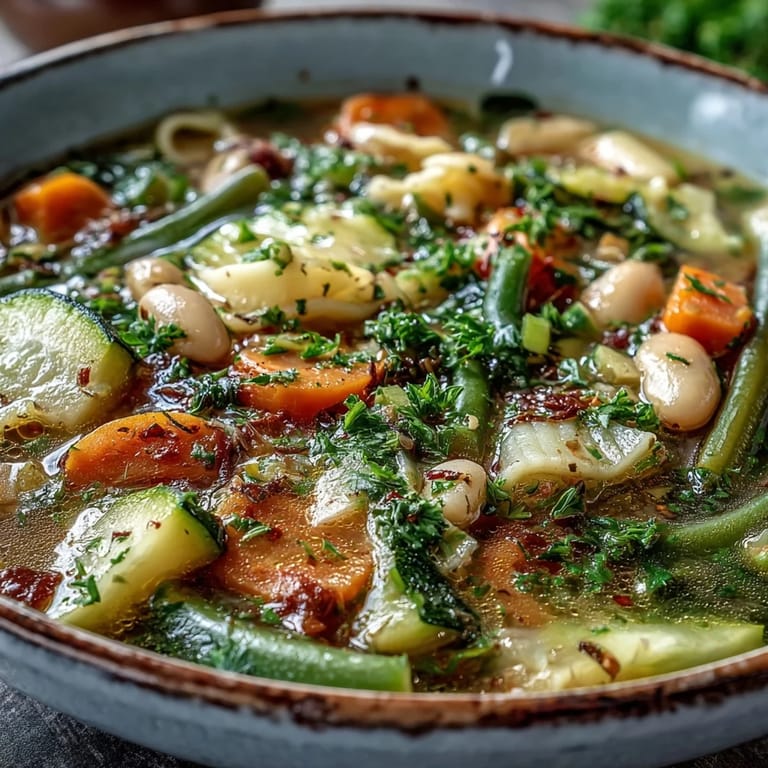
- Taste the soup and stir in your oregano, basil, salt, and pepper. Remove the bay leaf, which has done its quiet work. Finish with fresh parsley scattered across the top of each bowl, letting its brightness carry through every spoonful.
 Pin it
  Pin it
 There was a moment last winter when I realized this soup had become the thing I make when someone needs comfort, when the news is heavy, or when the weather turns cold enough that hot bowls feel like the only language that makes sense. It's humble enough to feel unpretentious but thoughtful enough to prove you care.
Seasonal Adaptations
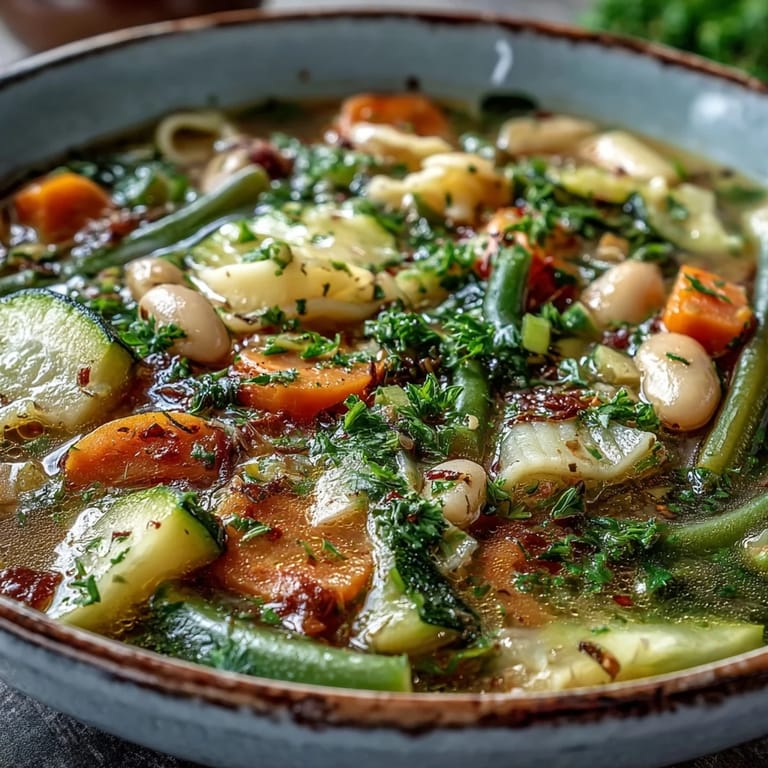
The beauty of minestrone lives in its flexibility, and I've learned to think of it as a seasonal conversation rather than a fixed recipe. In spring, I add fresh peas and tender leeks, letting them cook just until they're bright and still slightly firm. Summer calls for zucchini, green beans, and fresh tomatoes if they're truly ripe, though honestly canned tomatoes usually have more flavor than what's in most supermarkets. Autumn brings butternut squash and kale, both of which need a few extra minutes to become tender. Winter is when I add savoy cabbage and root vegetables, sometimes even a small parsnip if I have one lingering in the bin.
Making It Your Own
I've watched people cook minestrone a thousand ways, and each version tells you something about what matters to them. Some cooks add a Parmesan rind while the soup simmers, letting it release its salty umami into every spoonful before fishing it out at the end. Others stir in a splash of white wine or red wine before adding the broth, giving the whole thing a deeper complexity. One friend swears by adding a tablespoon of pesto right at the end, which transforms it into something almost summery even in the dead of winter.
Serving and Storing
Minestrone tastes even better the next day, when the flavors have settled into each other and gotten to know one another properly. Serve it with crusty bread and a small dish of your best olive oil, so people can drizzle it on top if they want. This soup keeps for four days in the refrigerator, though the pasta will continue drinking up broth, so you might need to add a splash of water when you reheat it.
- If you're making this vegan, use vegetable broth and skip the Parmesan, or try nutritional yeast for a savory finish.
- For a gluten-free version, simply use gluten-free pasta and double-check your broth for hidden wheat.
- Leftover minestrone can be frozen for up to three months, though it tastes best within the first month.
 Pin it
  Pin it
 This is the kind of soup that quietly works its way into your regular rotation and then becomes the thing people ask you to make. It asks so little of you but gives back so much warmth.
Recipe FAQ
- → Can I make this soup ahead of time?
Yes, minestrone tastes even better the next day as flavors meld. Store in the refrigerator for up to 4 days. Add a splash of broth when reheating as the pasta absorbs liquid over time.
- → What vegetables work best in different seasons?
In summer, use zucchini, green beans, peas, and fresh tomatoes. For winter, opt for butternut squash, kale, savoy cabbage, and leeks. Spring works well with peas, asparagus, and baby spinach.
- → Can I freeze vegetable minestrone?
It's best to freeze the soup before adding pasta, as cooked pasta becomes mushy when frozen. Freeze the vegetable and bean base for up to 3 months, then add fresh pasta when reheating.
- → How do I make this soup more filling?
Increase the pasta or beans, add diced potatoes, or stir in white beans. Serve with crusty bread and a drizzle of olive oil for a complete meal.
- → What can I substitute for the pasta?
Use rice, quinoa, farro, or orzo for variety. Gluten-free pasta works perfectly for those with dietary restrictions. Add grains during the last 15-20 minutes of cooking.
- → How can I add more flavor to the soup?
Add a Parmesan rind while simmering, use homemade vegetable stock, include a splash of red wine with the tomatoes, or finish with fresh basil and quality extra virgin olive oil.